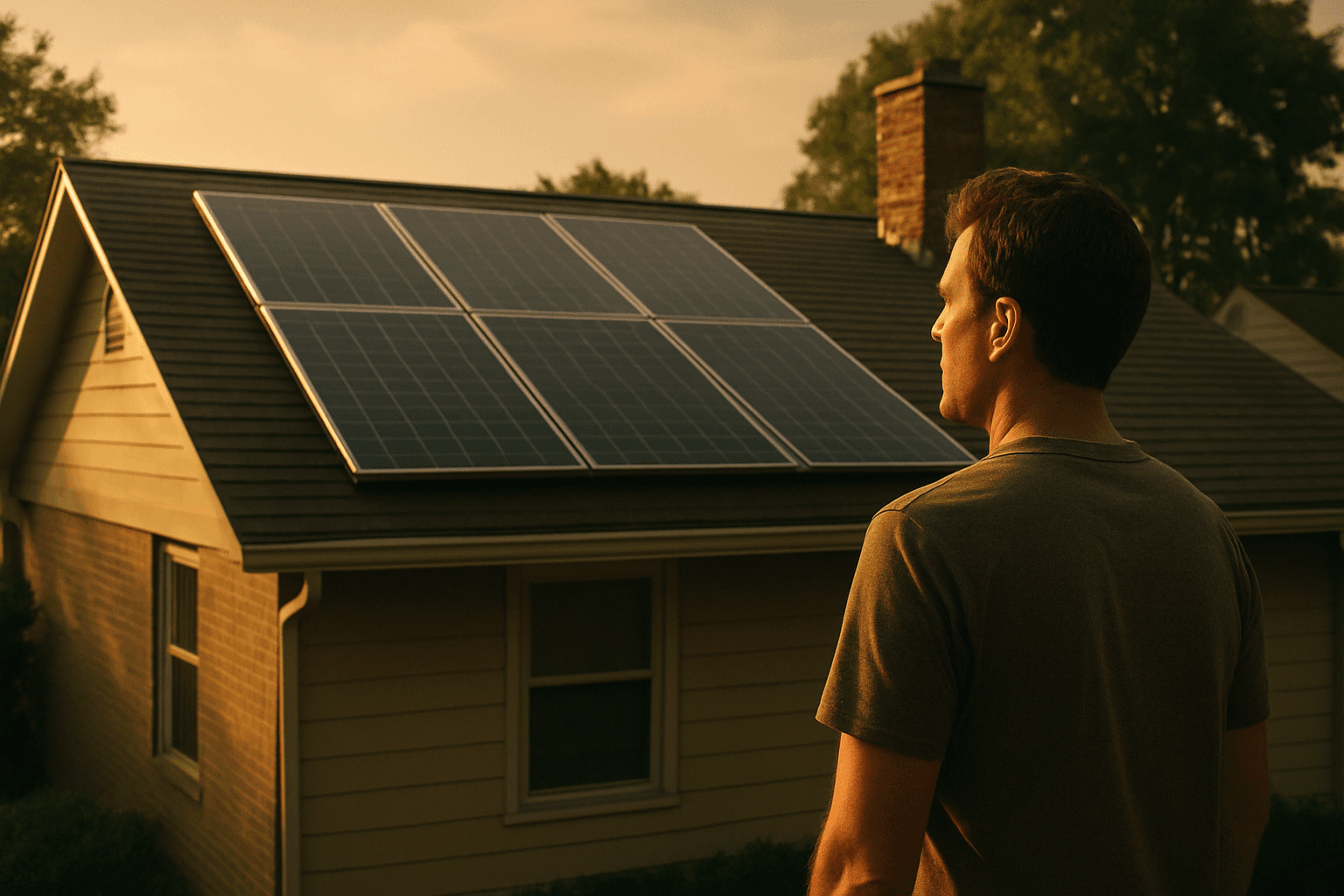
In most states, a 2026 cash-purchase residential solar payback runs 10-18 years at current install costs ($2.50-3.50/W) without the expired 30% federal Investment Tax Credit. Hawaii, Massachusetts, and pre-NEM-3.0 California are the fast paybacks at 8-12 years. Texas, Florida, and Arizona stretch to 12-16. The single biggest variable is no longer the panel — it's the state. Electricity rates, surviving state incentives, and net-metering rules now drive the math more than they ever did when the federal subsidy anchored everything.
The math without the 30% federal credit
A typical 2026 residential install: 8 kW system, $24,000 before incentives, on a home in a state with $0.16/kWh electricity rates and full-retail net metering. The system produces roughly 11,000 kWh/year, of which 60% offsets self-consumption and 40% exports to the grid for net-metering credit. Annual savings: 11,000 × $0.16 = $1,760 in pure electricity-bill avoidance.
Subtract any state rebate or tax credit from the $24,000 install cost. In a state like New York, NY-Sun Megawatt Block plus the 25% income-tax credit (capped at $5,000) might reduce the net cost to $17,000-19,000. In a state with no surviving incentives — Wyoming, West Virginia, Mississippi — the homeowner pays the full $24,000.
$24,000 ÷ $1,760 = 13.6 years. The same math with the 30% federal ITC included (had it survived): $24,000 - $7,200 = $16,800. $16,800 ÷ $1,760 = 9.5 years. The federal credit, while it existed, was cutting roughly 4 years off most state paybacks. That cut is now gone.
State-by-state payback ranges (2026 cash purchase)
These are 2026-04 estimates for an 8 kW system in median solar exposure. Real numbers vary with system size, self-consumption rate, and utility-specific net-metering structure.
Fast (8-12 years):
- Hawaii — 8-10 years. $0.32/kWh electricity, $5,000 state income-tax credit.
- Massachusetts — 9-12 years. $0.27/kWh, SMART tariff, state credit, active SREC market.
- New Jersey — 9-12 years. $0.21/kWh, Successor Solar Incentive (SuSI), tax exemptions, active SRECs.
- New York — 9-12 years. NY-Sun Megawatt Block, 25% state credit ($5,000 cap), NYSERDA storage rebate.
Moderate (11-15 years):
- Illinois — 11-14 years. Illinois Shines / Adjustable Block Program plus active SREC market.
- Maryland — 11-14 years. Energy Storage Tax Credit, state solar grant, active SRECs.
- Oregon — 11-14 years. Energy Trust residential incentive, state solar+storage rebate.
- Rhode Island, Vermont, Minnesota, Connecticut — 11-15 years. State programs vary; utility net-metering active.
Slow (12-18 years):
- Texas — 12-16 years. $0.13/kWh, property-tax exemption, utility-specific rebates. Net-metering varies by utility.
- Florida — 12-15 years. $0.14/kWh, full-retail net metering, sales/property tax exemptions, no state credit.
- Arizona — 13-16 years. $0.13/kWh, APS avoided-cost crediting, no state credit. Sun helps; export rate doesn't.
- Colorado, Nevada, Utah, New Mexico — 12-15 years. Modest state programs, moderate rates.
- WY, MS, WV, ND, TN — 14-18+ years. No state programs, low rates, marginal even with full-retail net metering.
The two factors that flip a state from slow to fast
A state runs a fast residential solar payback when two conditions stack. First: high retail electricity rates ($0.18/kWh or higher). Every kWh the array offsets is worth more in a high-rate state than a low-rate state. Hawaii's $0.32/kWh is the extreme; Massachusetts at $0.27 and California at $0.30 (pre-CARE rate) are close behind. The South and Mountain West run $0.12-0.15/kWh — and at those rates, a kWh of solar production actually doesn't offset enough bill to pay back the panel quickly.
Second: an active SREC market or strong state income-tax credit. SRECs in New Jersey ($200-260 per certificate), Massachusetts ($230-280), Illinois ($50-75), and Maryland ($50-65) produce meaningful annual income on top of bill avoidance. State income-tax credits in New York ($5,000 cap), Hawaii ($5,000 cap), South Carolina (25% with $35,000 over 10 years), and New Mexico ($6,000 cap) reduce the install cost on the front end.
A state that has both — high electricity rates and a strong state program — runs a fast payback even without the federal credit. A state that has neither is on a 14-18 year timeline regardless of how good the panels are.
What changes the answer for a specific home
Self-consumption rate matters more than most homeowners expect. A home that consumes 75% of its solar production in real time does better in states with avoided-cost crediting and roughly the same in full-retail states. Time-of-use rates change the calculus further — if your utility charges $0.30/kWh during 4-9 PM and your array peaks at noon, batteries become an economic decision.
System size matters too. The right size for 2026 economics is the one that matches roughly 80-90% of annual consumption — not the 110% target some installers default to.
What this means for the buying decision
In a fast-payback state (HI, MA, NJ, NY), residential solar still works as a financial purchase post-ITC. In a moderate-payback state, it works for a homeowner planning to stay 12+ years. In a slow-payback state, it becomes a resilience or values purchase — payback is real but it's measured in 14-18 years, which is longer than the median homeownership tenure of 13 years.
Run your specific case. The Solar Reality Check tool prices the math by state, utility, system size, and self-consumption rate — without the expired federal credit baked in. For the broader post-ITC framing, see the solar hub. This is reference, not a quote.