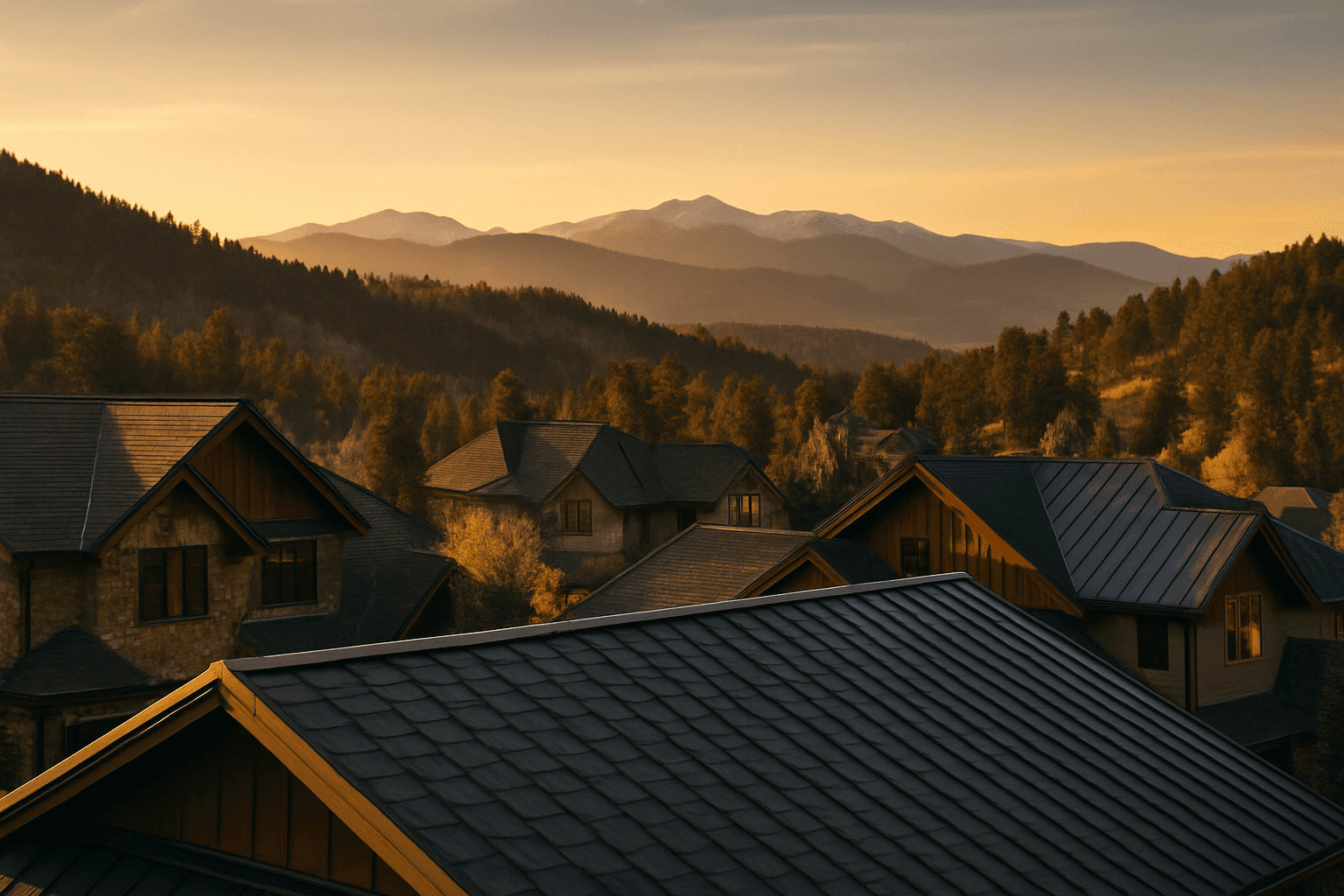
Colorado sits in IECC climate zone 5B with the highest hail-risk tier in the country, and that single fact reorganizes nearly every roofing decision a homeowner here will make. The Front Range — Denver, Colorado Springs, Fort Collins, and the suburbs sprawling east toward the plains — absorbs a disproportionate share of the severe-hail belt running from Texas up through Wyoming. The state's median replacement cost of $16,000 (2026 median, range $12,000–$24,000) reflects both that loss history and the harder, heavier roofing systems Colorado homeowners actually install in response.
Class 4 impact-resistant shingles dominate, and the discount is real
Roughly 58% of Colorado roofs are now Class 4 impact-resistant asphalt — the highest share in any state, well ahead of national averages. Standing-seam metal accounts for another 22%, mostly on mountain properties where snow-shed and ember resistance matter as much as hail. Most major Colorado carriers offer premium discounts of roughly 10–30% for verified Class 4 product, and the math typically works inside one renewal cycle on a Front Range home. That said, the discount only applies when the installer documents the product class on the certificate of completion and the carrier confirms it on the policy. Plenty of homeowners pay the Class 4 premium and never get the credit posted because no one followed up.
The storm-chaser problem and what the legislature did about it
After the 2017 and 2018 hailstorms, out-of-state contractors flooded Front Range neighborhoods with door-knocking sales teams pitching free inspections and "no out-of-pocket" full replacements. The Colorado legislature responded with HB-22-1149, which tightened the existing Roofing Contractor Act — requiring written contracts with itemized pricing, a 72-hour right of rescission tied to the insurance claim outcome, and an explicit ban on contractors paying or rebating any portion of a homeowner's deductible. Roofing licensing in Colorado is still county-level, not state-level, which means the contractor working on your house in Douglas County may hold no license recognized in Arapahoe County twenty minutes away. Verify the license at the specific county building department where the work is permitted — and walk away from any contractor offering to "absorb" the deductible.
Solar economics after the federal credit expired
The federal residential solar ITC ended on December 31, 2025. What survived in Colorado: a state sales-tax exemption on solar equipment and the Xcel Energy Solar*Rewards production-incentive program, which still buys down installed cost for Xcel customers within current funding tranches. Colorado does not run an active SREC market and never did. With the federal credit gone, the honest 2026 payback story in Colorado depends almost entirely on whether your address sits inside Xcel territory, what tranche pricing the program is offering when you sign, and whether your roof is in good enough condition to host a 25-year array. If you're due for replacement in the next five years, do the roof first — re-roofing under existing panels adds $3,000–$5,000 to the project.