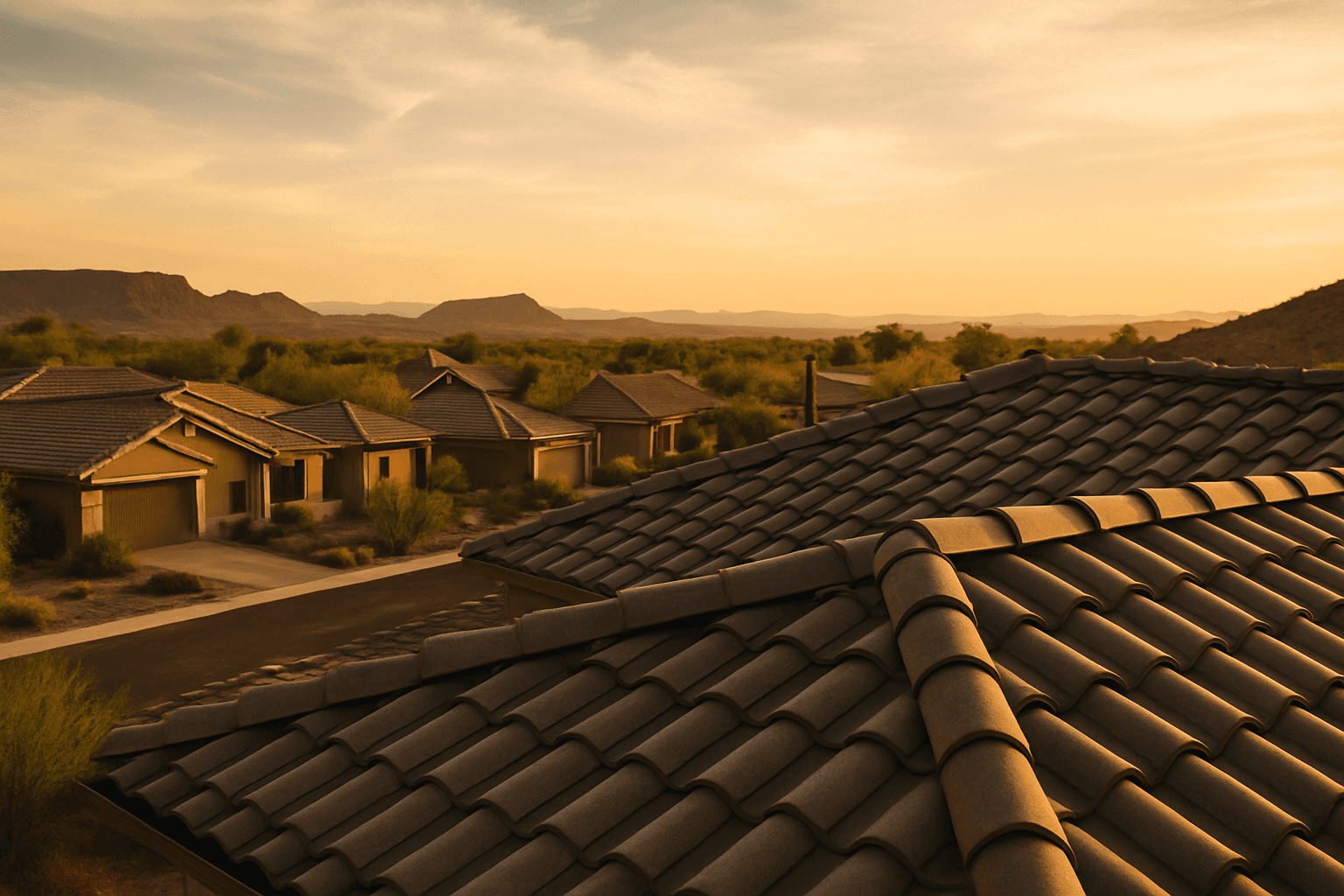
Texas is the single most consequential roofing market in the country, and almost nothing about it is uniform. The state spans IECC zones 2A through 3B, with Hurricane-tier wind exposure on the Gulf coast and Extreme-tier hail risk across North Texas — Dallas-Fort Worth, the Hill Country, and the I-35 corridor up through the Red River. Replacement costs run $9,500–$19,000 (2026 estimate) for a 2,000 sqft asphalt roof, with a median near $12,500. The market mix is telling: roughly 54% architectural asphalt, 18% Class 4 impact-resistant asphalt — a share you don't see anywhere outside the hail-extreme states — and 14% concrete tile, weighted toward Central Texas and San Antonio. Texas does not require a state-issued roofing contractor license, one of the most permissive postures in the country, and the implications show up every storm season.
The 2017 hail-claim reform and what it means now
The Texas Legislature passed HB-1774 in 2017 in response to the post-2016 hailstorm litigation wave, and the rules it set up still govern claims today. The filing deadline is one year from the date of damage — significantly tighter than most states' two-year window — and the clock starts on the storm date, not the day you noticed the leak. Written notice and a damage estimate must reach the carrier at least 60 days before any lawsuit. The practical effect is that a homeowner who waits through a leasing or selling cycle before filing a hail claim may discover the claim is time-barred entirely. Document the storm date, photograph the roof within 30 days, and put the carrier on written notice early.
Wind/hail percentage deductibles are essentially universal in Texas now — typically 1-3% of dwelling coverage rather than a flat dollar amount. On a $400,000 North Texas home, that's $4,000-$12,000 out-of-pocket before the carrier pays the first dollar. Combine that with no state-level licensing, and the post-storm landscape fills with door-knocking crews offering "no out-of-pocket" replacements within 48 hours of a hail event. Any contractor offering to "absorb," "waive," or "rebate" your deductible is asking you to commit insurance fraud — that practice has been illegal under Texas Insurance Code §§ 27.02 and 4102 since the 2019 amendments, and the carrier can void the claim and the policy.
Solar in Texas, 2026
The federal residential solar ITC expired December 31, 2025. What survived in Texas: a statewide property-tax exemption on solar equipment, and utility-specific rebates from Austin Energy, Oncor, CPS Energy, and a handful of municipal utilities — though program funding rounds open and close on their own schedules. ERCOT is not a net-metering market in the conventional sense; export compensation is set by the retail electricity provider's specific buyback plan, and rates vary by an order of magnitude between providers. The honest 2026 payback story now hinges on whether you live inside a utility rebate footprint, which retail provider you choose for buyback, and whether your roof is in good enough condition to host a 25-year array. If the roof is 12-15 years old or more, do the roof first. This is reference, not a quote — your specific replacement cost depends on pitch, layers, decking condition, and access.