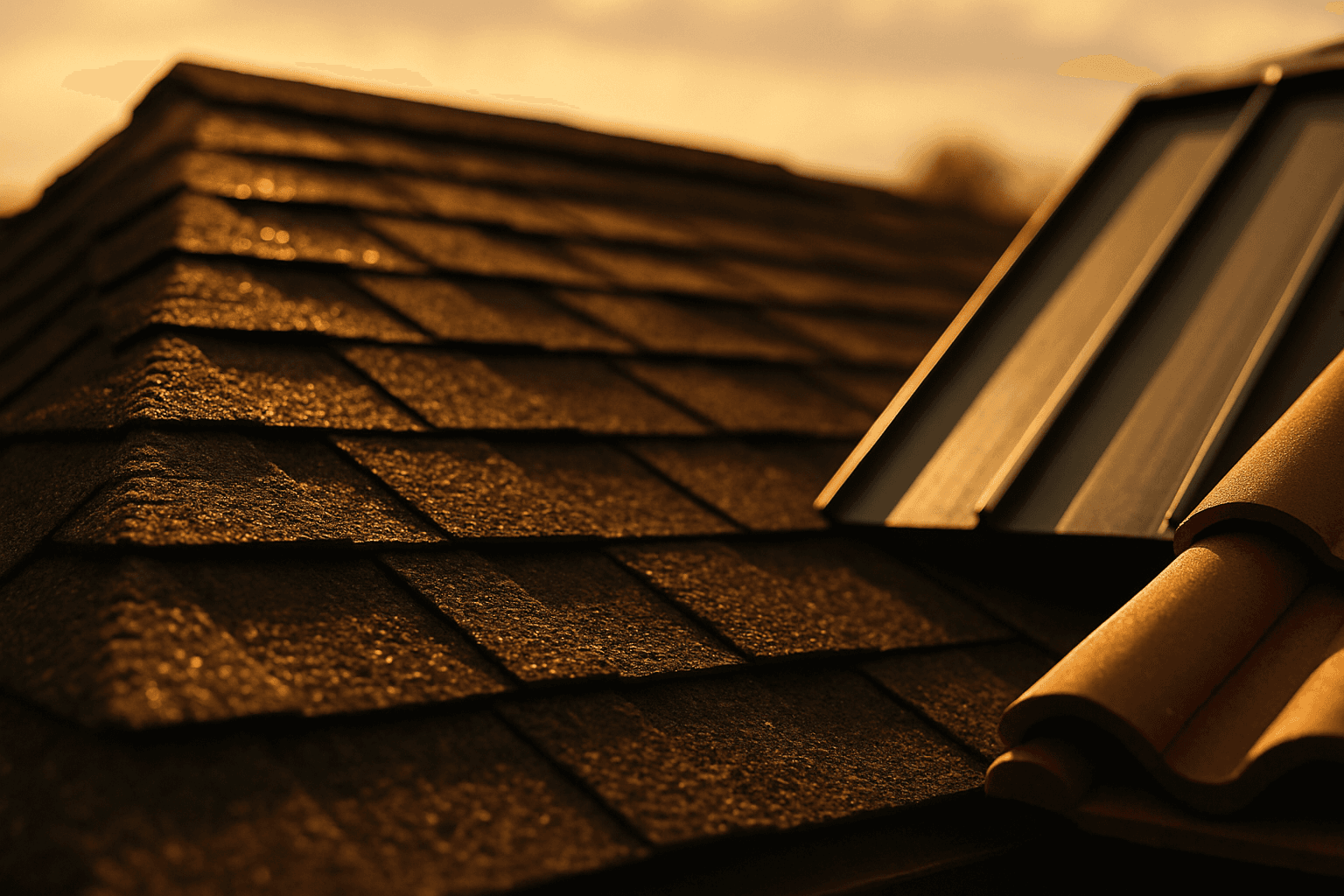
Roofing materials,
by failure mode.
Asphalt, metal, tile, slate. Real lifespan, 30-year lifecycle cost, where each material actually fails — and why the right choice depends on climate zone, hail tier, and how long you'll own the home.
What's the right roofing material for my situation?
The decision is climate × ownership-horizon × budget. Architectural asphalt is the right answer for ~70% of US homes — 25-30 years, $9,500–$25,000 installed by region, broad contractor pool. Class 4 impact-resistant asphalt for hail-belt states. Standing-seam metal for long horizons or hurricane belts. Concrete/clay tile for desert Southwest and Mediterranean aesthetic. Slate for high-budget historical preservation.
Lifecycle cost over 30 years
The honest comparison isn’t install cost — it’s install cost amortized over actual lifespan1, plus expected mid-life repairs. Rough 2026 30-year math for a 2,000 sqft roof in a moderate-cost market:
| Material | Install (2026) | Field lifespan | Replacements in 30 yrs | 30-year total |
|---|---|---|---|---|
| 3-tab asphalt | $9,000 | 15-20 yrs | 1.5-2 | $15-18k |
| Architectural asphalt | $12,500 | 25-30 yrs | ~1 | $12-13kWins on raw 30-yr math for most homes |
| Class 4 impact asphalt | $17,500 | 30-40 yrs | 0-1 | $17-21kInsurance discount in hail belts shifts this favorably |
| Standing-seam metal | $30,000 | 40-70 yrs | 0 | $30kPulls ahead at 50-yr horizons + hurricane belts |
| Concrete tile | $35,000 | 50+ yrs | 0 | $35-40kIncludes mid-life underlayment at ~25 yrs |
| Slate | $65,000+ | 75-150 yrs | 0 | $65-75k |
Architectural asphalt wins on raw 30-year math for most homes. Metal pulls ahead at ~50-year horizons and in hail/hurricane belts. Tile + slate are aesthetic + heritage decisions, not pure-economics decisions.
Where each material fails
Every material has a primary failure mode1. Knowing it tells you what to inspect for and what kills the warranty3.
| Material | Primary failure mode | Secondary mode |
|---|---|---|
| 3-tab asphalt | UV degradation — granule loss → mat exposure → mat tears | Wind uplift on under-rated tabs |
| Architectural asphalt | Seal-strip failure from hot summers + thermal cycling | Valley wear, ridge-cap seam failure |
| Standing-seam metal | Coating failure on cheap installs (Galvalume + Kynar hold 50+; cheap painted steel under 20) | Fastener back-out on through-fastened systems |
| Concrete tile | Underlayment fails first — decade or two before the tile | Tile cracks from foot traffic and tree-limb impact |
| Clay tile | Brittle to impact, color fade | Mortar joint failure on terra-cotta |
| Slate | Nail corrosion — copper holds 100+; iron rusts in 30-40 | Individual tile delamination on lower-grade stone |
Common questions
Sources
- National Roofing Contractors Association·NRCA Roofing Manual — Industry technical reference for material specs and failure-mode analysis.
- BNP Media·RoofingContractor magazine — Trade publication tracking install costs, failure rates, and contractor practices.
- GAF Materials LLC·GAF Roofing System Warranties — Manufacturer warranty terms for asphalt shingle systems.
- Owens Corning Roofing & Asphalt·Owens Corning Roofing Warranties — Manufacturer warranty terms for asphalt shingle systems.
- International Code Council·International Energy Conservation Code climate zones — Climate zone boundaries used for building-code material requirements.
See what's common in your state.
Material mix is regional. Per-state pages show market share for the top three materials in your climate zone, plus the cost range for each.