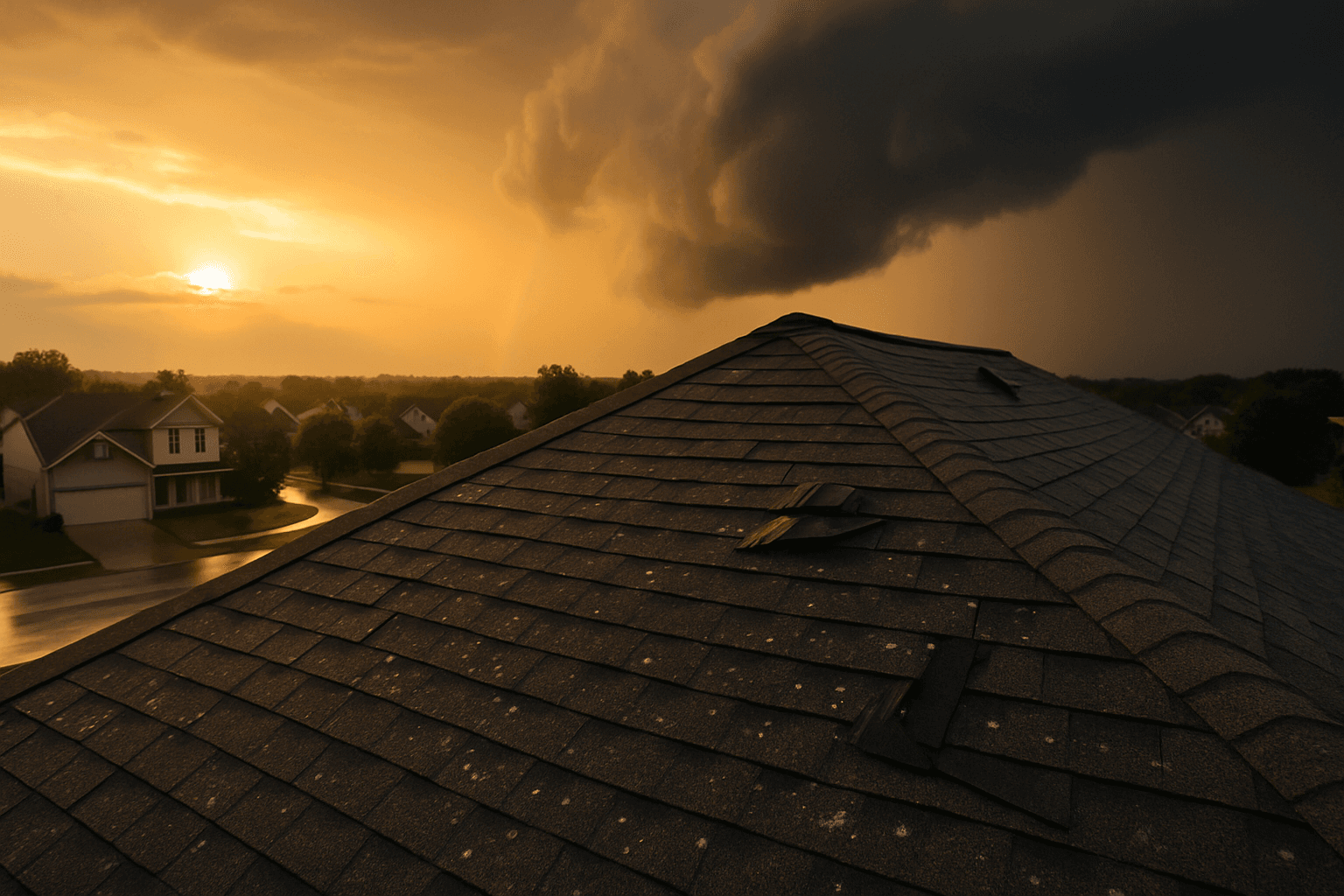
Storm damage,
decided on the math.
Hail, wind, and the insurance claim that follows. When to file, when not to, how to read an adjuster scope before you sign — and the documentation that actually changes outcomes.
When does a storm-damage claim pencil out?
When expected repair cost exceeds your deductible plus a 20-30% premium-bump cushion. Most carriers raise wind/hail premium 8-12% for 3-5 years after a paid claim. A $4,000 claim with $2,500 deductible nets you ~$1,500 today against ~$1,600-$2,400 in future premium. Use the insurance claim tool for the exact math by carrier and state.
The break-even framework
The question is not “is the damage real?” The question is “does filing leave me net positive over a 5-year window?” The variables: expected repair cost, deductible (especially wind/hail percentage deductibles, which are large), your carrier’s premium-bump pattern (8-12% on the wind/hail peril for 3-5 years is typical), your prior claim count in C.L.U.E. (one claim is fine; two within 3 years is non-renewal territory in soft markets), and your time horizon (planning to move in 18 months changes the math).
The first 72 hours after a storm
Document before you clean up. Date-stamped photos from multiple angles, both ground-level and aerial if accessible. Then put a tarp on any active leak — your policy obligates you to mitigate, but does not obligate you to repair before the adjuster sees the damage.
Note the NOAA event. Look up your address on the NOAA Storm Events database to confirm a recorded hail or high-wind event. Adjusters cross-reference this; an unrecorded event makes the claim much harder.
Get a contractor damage report. Not a quote — a report on contractor letterhead documenting damage, location, severity, and probable cause. Most reputable roofers will do this for $0-$300; many do it free in the hope of winning the replacement work.
Read your policy — specifically the “duties after loss” clause and the “wind/hail deductible” section. Filing windows vary 60 days–1 year; deductibles can be percentage-based.
Common questions
Use the insurance claim tool.
Address + roof age + last damage event → hit-probability score, deductible-vs-repair break-even, and a documentation checklist sized to your specific claim.