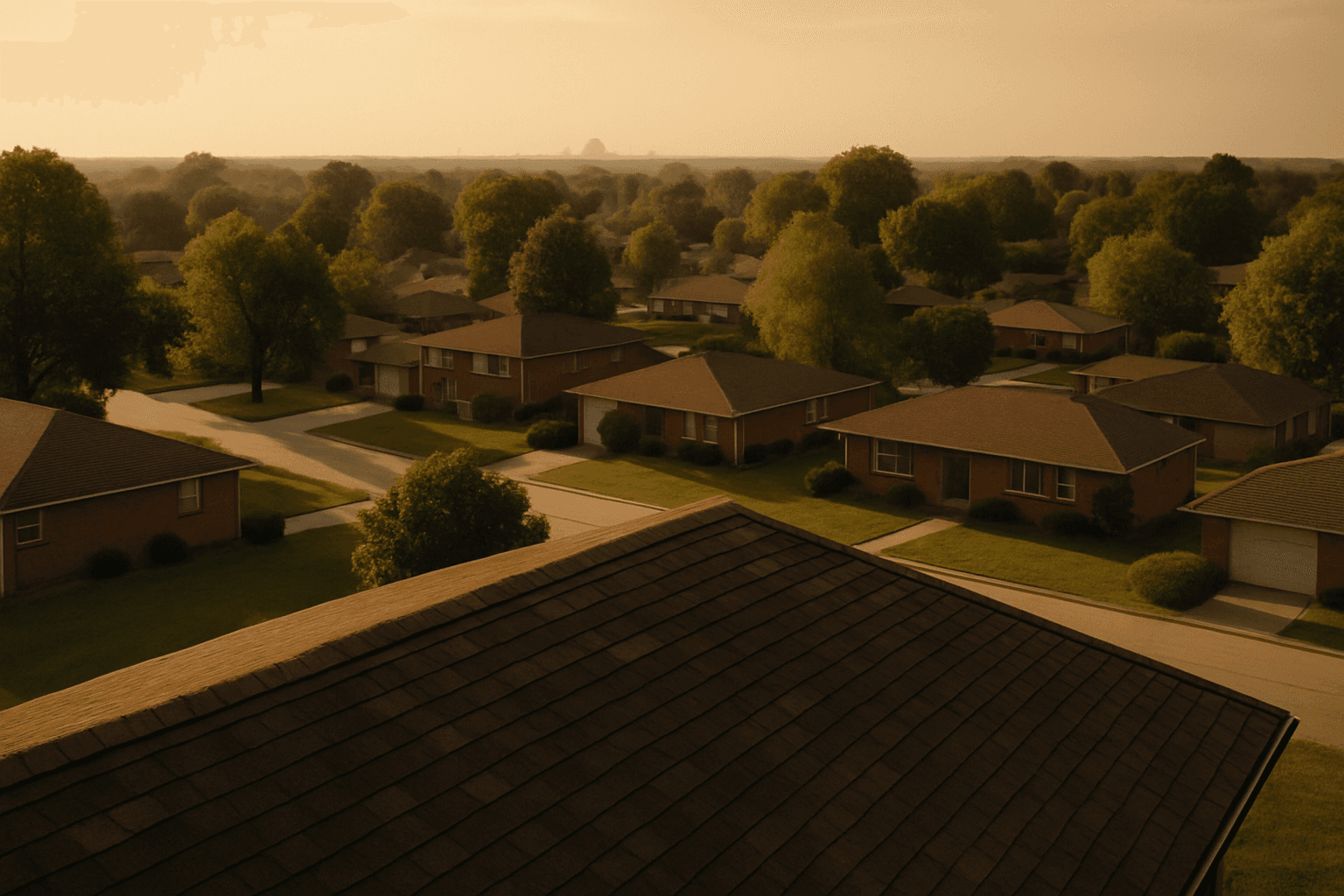
Illinois sits in IECC climate zone 5A with a high hail risk and severe wind exposure — a combination that produces more roof claims per insured home than the national average and a denser population of storm-chasing roofers than almost any other Midwest state. A 2,000 sqft asphalt replacement runs $11,000–$21,000 (median $14,500, 2026 estimate), with the spread driven heavily by Chicago-area labor pricing on the high end and downstate Illinois pricing closer to the floor.
The dominant failure mode here is multi-hazard. A single Illinois roof can take a March hailstorm, a July straight-line wind event, and a January ice-dam in the same year. That sequencing matters because each event triggers its own insurance question — and roofers who chase storms know the claim cycle better than most homeowners do. The honest framing: hail damage that doesn't break the felt or expose the deck is cosmetic, not functional, and many policies after 2018 explicitly exclude cosmetic damage from coverage. The first thing to read on a new policy renewal in Illinois is the hail and wind endorsement language — especially the ACV-versus-replacement-cost election and any percentage deductible that activates on named events.
Storm-chaser hygiene
Illinois requires a state-issued roofing contractor license through the Illinois Department of Financial and Professional Regulation. Verify the license number on the IDFPR public lookup before signing anything. A truck with out-of-state plates, a "free roof inspection from your insurance" pitch, and pressure to sign an Assignment of Benefits the same day is the canonical storm-chaser profile — that crew will be in Iowa next month. A local roofer with an Illinois license, a permanent business address, and references you can drive to is worth more than a discount from a transient operation, and it is now easier than ever to verify either one before the contract goes on the table.
Solar — the Illinois Shines exception
Most states lost meaningful solar economics when the federal residential ITC expired 12/31/2025. Illinois is one of the few exceptions. The state's Adjustable Block Program — branded as Illinois Shines — survived the federal sunset and still issues 15-year contracts for solar renewable energy credits (SRECs) generated by participating residential systems. Combined with full retail-rate net metering on Ameren and ComEd, the Illinois solar payback math is meaningfully better than what's available in most neighboring states. The catch: the Illinois Shines program operates on a block-allocation queue, and capacity opens and fills cyclically. An installer who cannot tell you which block your system is queued into and what its current REC price is should not be the installer you sign with. A roof replacement before solar — to avoid pulling and re-flashing panels mid-warranty — is the standard sequencing for any Illinois homeowner whose roof is over 12-15 years old at the time of solar contract signing.
This is reference, not a quote.