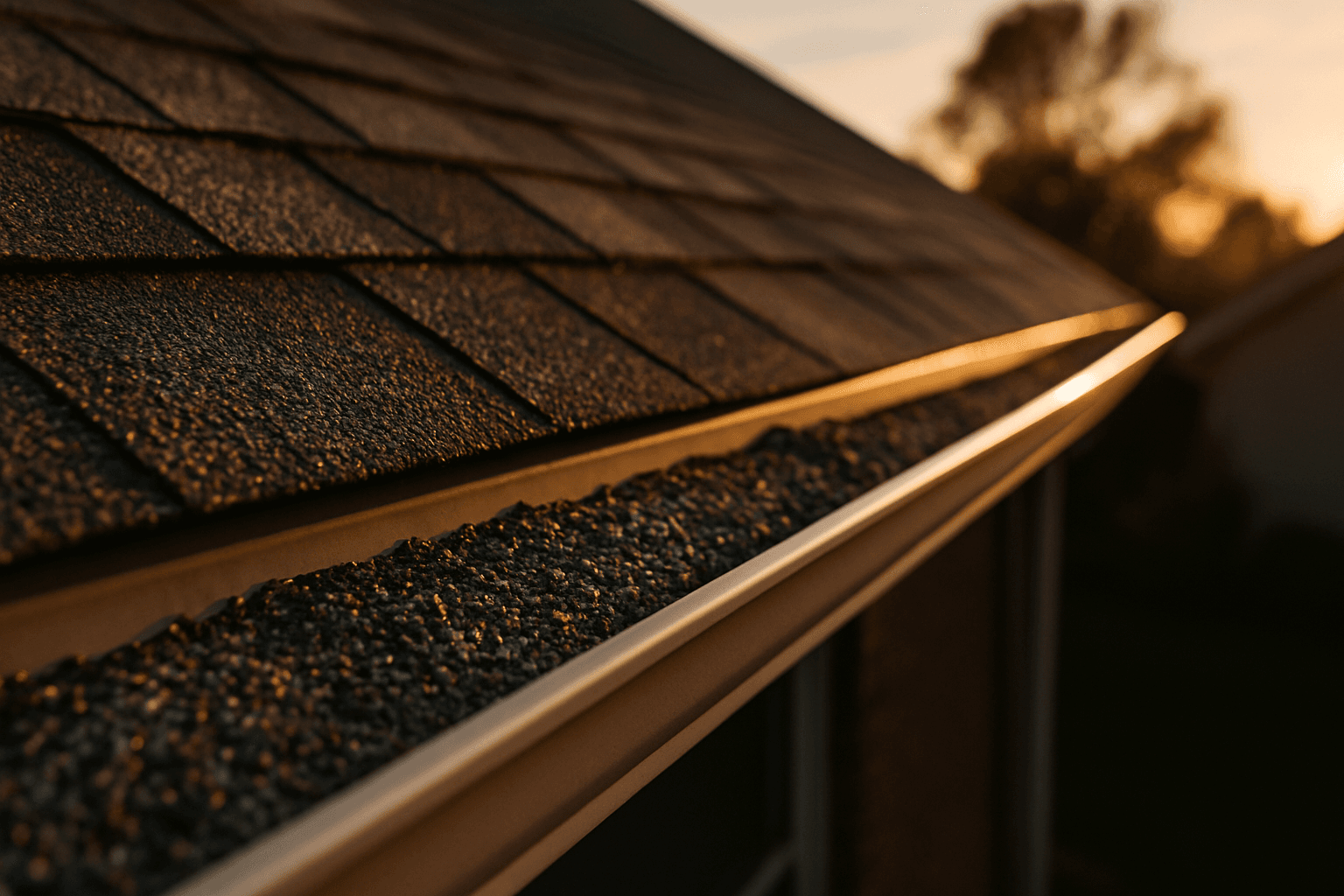
Granule loss is the asphalt shingle's UV armor breaking down. The colored mineral granules embedded in the top surface protect the underlying asphalt mat from sunlight; once they thin past a certain point, the mat oxidizes, embrittles, cracks, and leaks. Reading granule loss correctly — distinguishing normal end-of-life shedding from defect-driven failure — is one of the higher-leverage diagnostics a homeowner can do.
The four real causes, in roughly the order they show up across a roof's life: factory loose-granule shedding, UV exposure, thermal cycling, and mechanical impact (hail and foot traffic). Different causes leave different signatures.
The four causes
Factory loose granules. Every new asphalt roof sheds excess granules from the manufacturing process for the first 12-24 months. These are loose granules sitting on top of the seal strip, not granules embedded in the asphalt. After two or three rain events, you'll see them in the gutter. This is normal, expected, and not a defect.
UV degradation. Sunlight breaks down the asphalt binder that holds the granules in place. The granules don't fall off in any single event; they release one or two at a time over years, accelerating as the binder weakens. UV is the dominant cause of normal end-of-life granule loss in years 18-25 on most asphalt roofs, earlier in hot southern climates.
Thermal cycling. Asphalt expands when hot and contracts when cold. The daily and seasonal expansion-contraction cycle stresses the bond between granule and asphalt. In hot-sun climates with cold nights — high desert, the Mountain West, the high plains — thermal cycling can compress granule-loss timelines by 5-10 years compared to a coastal mild climate.
Mechanical impact and foot traffic. Hail strikes knock granules off in discrete impact patterns — typically circular bare spots 1-2 inches across. Foot traffic during inspection or installation embeds dirt and grit, then peels granules off when the boot lifts. Roofers walking the same path repeatedly during a job leave a characteristic wear lane that's visible from the ground for years.
How to read the timeline
Distinguishing normal from premature is mostly a question of when the loss is happening and where:
Years 1-2: Heavy gutter granules — normal. Factory loose-granule shedding. Don't file warranty claims, don't worry about it. The shingles aren't degrading; they're settling in.
Years 3-4: Light gutter granules after heavy rain — normal. Some ongoing settlement plus low-level UV exposure. No action.
Years 5-15: Heavy gutter granules with bare spots visible from the ground — abnormal. This is the window where premature failure shows up. Possible causes: thermal-blistering manufacturing defect, severe under-ventilation cooking the shingles from the underside, a bad batch of shingles. Document with photos, pull the original install paperwork, and contact the manufacturer's warranty department if the roof is under their stated coverage window.
Years 18+ on a 25-30 year shingle: Heavy granule loss — normal end-of-life signal. The roof is approaching the end of its service life. This isn't a defect; it's a replacement signal. The honest framing: don't try to extend a 22-year roof with widespread granule loss past year 25. The leaks are coming inside a 3-7 year window.
What pressure-washing does
It accelerates everything. The high-pressure stream embeds in the seal strip, mechanically lifts the asphalt-bonded granules, and strips off years of useful UV protection in a single afternoon. NRCA's published guidance explicitly warns against pressure-washing residential asphalt shingles. If algae or moss are the cleanup target, the alternative is soft-wash chemical treatment: sodium hypochlorite (diluted bleach) for algae, zinc-strip retrofitting for ongoing prevention. Soft-wash is gentler on the granules and more effective on biological growth than pressure alone.
The same caution applies to walking the roof for cleaning. Every step costs you a small amount of granule. Two roofers walking a roof to clean it isn't free service; it's accelerated wear.
Granule loss and hail-claim documentation
Granule loss is one of the recognized signals adjusters use when assessing hail damage. The pattern matters: irregular circular bare spots roughly 1-2 inches across, sometimes with a bruise visible on the underlying mat where the impact compressed the asphalt. This signature is distinct from the uniform thinning of age-related UV loss, and a competent adjuster reads them differently.
If you've had a hail event and you're considering a claim, granule-loss documentation is part of the photo packet. Date-stamped photos within 72 hours of the storm. NOAA Storm Events confirmation for your zip and date. Multiple angles on each affected slope. An independent inspector — not the roofer who's bidding the replacement — adds credibility to the file. See the storms and insurance guide for the full claim-documentation framework.
For lifespan-by-material context and the broader maintenance arc, see the lifespan hub. For specific material choices and the trade-offs across asphalt grades, the materials hub carries the full picture. Granule loss is the asphalt-specific diagnostic; metal, tile, and slate fail differently and on different timelines.
This is reference, not a quote.