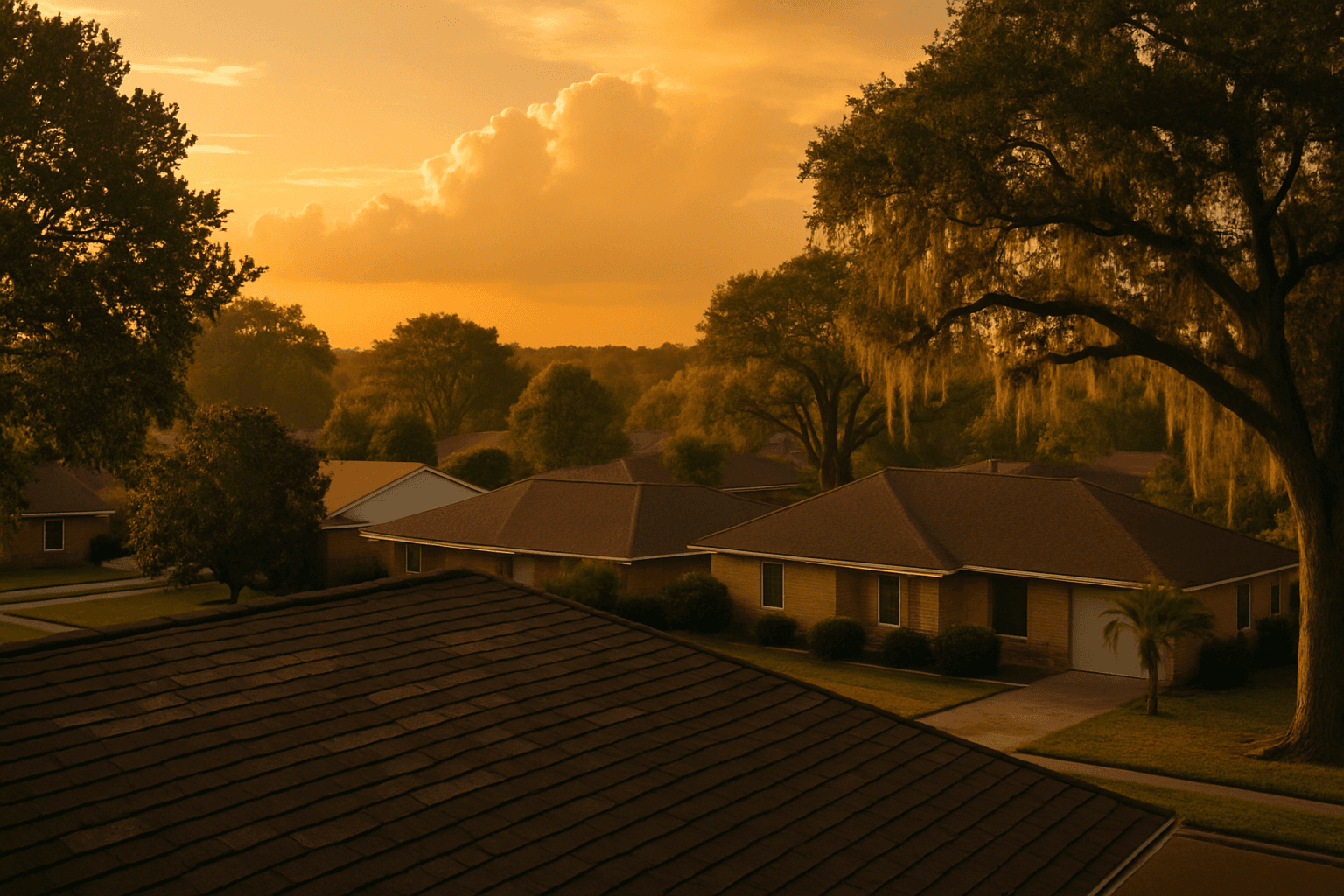
Arkansas sits in the upper edge of Dixie Alley, which makes it one of the most consequential hail and severe-wind states in the country — and the roofing market reflects it. Replacement runs $8,500–$15,500 (2026 estimate) for a 2,000 sqft asphalt roof, with a median near $11,000. Costs are lower than the national average because labor and logistics are favorable, but the frequency of replacement events runs higher here than the national norm. Arkansas is a state-licensed contractor jurisdiction (Contractors Licensing Board), and post-storm storm-chaser activity is a near-certainty in any year with a significant hail event.
The hail-belt insurance reality
Arkansas hail risk is in the High tier per NOAA Storm Events data — golf-ball-sized stones aren't unusual in the central and northwest counties, and 2-inch-plus stones happen. Two posture changes have already worked their way through the Arkansas insurance market and most homeowners haven't read their declarations pages closely enough to notice. First, percentage-based wind/hail deductibles are now common — typically 1-2% of dwelling coverage rather than a flat dollar amount, which means a $300,000 home has a $3,000-$6,000 hail deductible before the insurer pays a dime. Second, ACV (actual cash value) endorsements are creeping into older roofs. An ACV roof endorsement reimburses depreciated value, not replacement cost — meaning a 15-year-old roof might pay out 40-50% of replacement, leaving a major gap.
The honest move on an Arkansas policy renewal is to actually read it. Look for the wind/hail deductible language and any roof-specific endorsement. If you're on ACV for the roof, know it before the storm, not after.
Class 4 impact-resistant — the Arkansas wedge
Class 4 impact-resistant shingles (UL 2218 rated) have meaningful traction in Arkansas precisely because most major carriers offer policy premium credits for them — typically 10-30% off the wind/hail portion of the premium, depending on carrier. Over a 20-year ownership window, the credit can recover most or all of the upfront cost premium. The trade-off is that some Class 4 products use polymer-modified asphalt that can show cosmetic blemishes from large hail without functional failure, which has produced its own claims-denial pattern. Read the warranty language, and ask the contractor what specific UL 2218 product they're proposing.
Solar, 2026
Arkansas has no surviving statewide solar incentive program in 2026 — the federal residential ITC expired 12/31/2025, and Arkansas net-metering treatment varies utility by utility. Solar payback in Arkansas now runs entirely on avoided electricity cost, with no incentive layer. For most Arkansas homeowners, the more leveraged dollar in 2026 goes into the roof itself — a Class 4 impact-resistant install with carrier-credit-eligible product is a more reliable return than residential solar in the current rate environment.
This is reference, not a quote — get a licensed contractor's site-specific bid before budgeting.