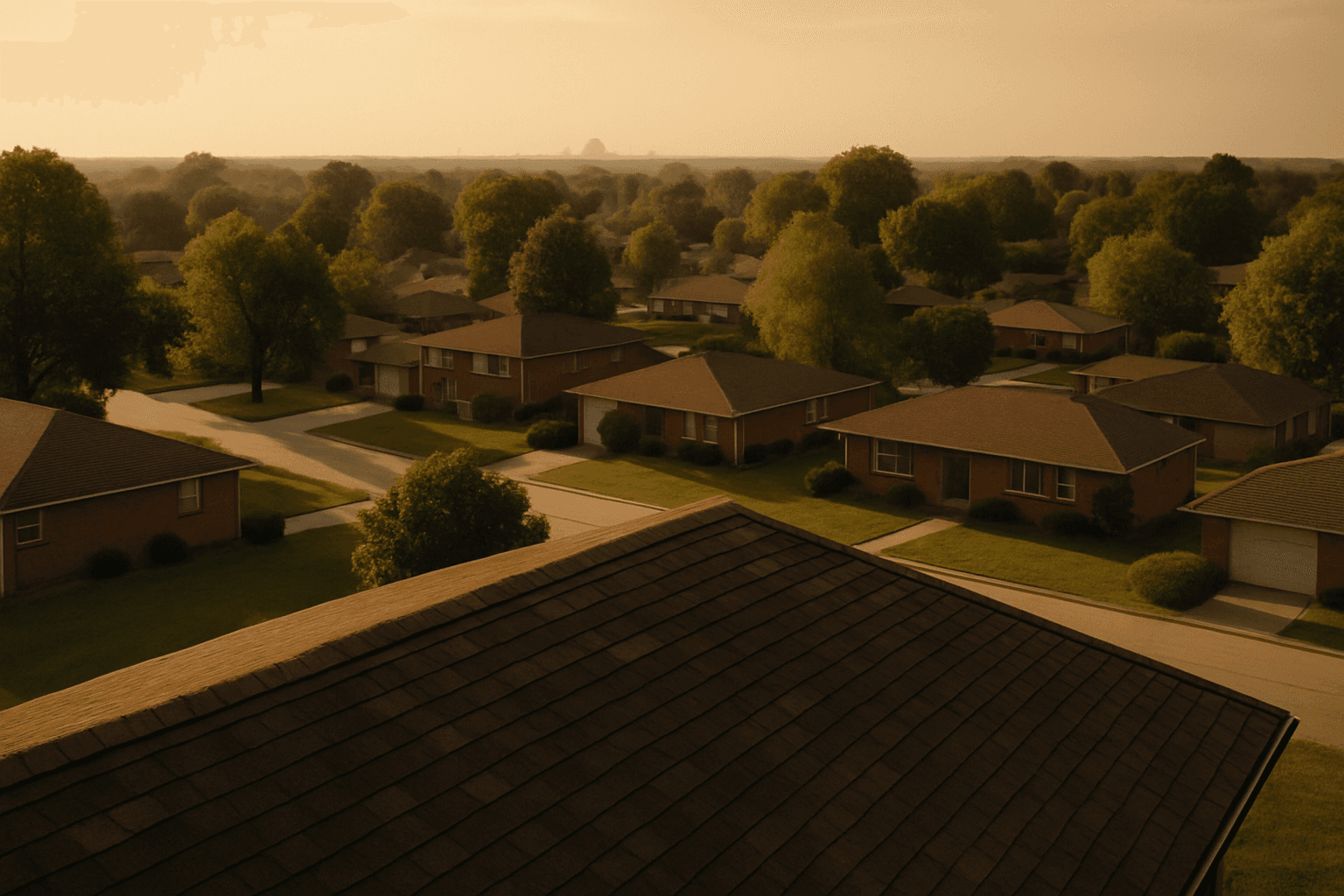
Iowa sits in the top tier of US hail-event frequency — the same extreme-hail bracket as Colorado, Kansas, Nebraska, Missouri, Oklahoma, South Dakota, and Texas. That single fact reorganizes how an Iowa homeowner should think about a roof. The climate zone is IECC 5A with severe wind exposure layered on top, and the August 2020 derecho that flattened a 700-mile corridor through central Iowa still shapes insurance pricing five years later.
A 2,000 sqft asphalt replacement runs $9,500–$18,000 (median $12,500, 2026 estimate), in line with the regional median but with a wider upper-bound spread than most Midwest states because complete tear-offs after a major hail or wind event command storm-pricing premiums. The dominant material is asphalt architectural shingle, but Class 4 impact-resistant asphalt has been gaining share in central and western Iowa where the hail history is densest — the 10-30% discount on the wind-and-hail portion of homeowner's premium is the economic argument that carries it across the line for most homeowners, not the cosmetic durability itself.
The percentage-deductible trap
The single most expensive misunderstanding for an Iowa homeowner with a roof claim is the percentage deductible. Many post-2018 Iowa policies use a 1-2% wind-and-hail deductible calculated on the dwelling coverage limit, not a flat dollar deductible. On a home insured for $400,000, a 2% deductible is $8,000 out-of-pocket before the carrier pays a dollar — even if total damages are $11,000. The flat-deductible policy your parents had in 1995 is not the policy you have now. Read the declarations page section labeled "wind/hail deductible" or "named-storm deductible" before the next storm season, not after. Iowa also has a 24-month statutory window to file a claim from the date of loss for most homeowner perils, which is shorter than many homeowners assume; a hail event from spring 2024 that you only noticed last fall is approaching its filing deadline.
What to watch for, who to hire
Iowa requires a state contractor registration through the Iowa Workforce Development Division of Labor — the verification step is on the homeowner before signing. Storm chasers from Texas, Oklahoma, and the Plains corridor flood into Iowa in the days after every major hail event, and the same Assignment-of-Benefits pressure that operates in Illinois and Missouri operates here. An out-of-state plate, a same-day signature push, and a vague claim of being "approved by your insurance company" is the canonical chaser profile. A local roofer with verifiable Iowa registration, a permanent address you can drive to, and three references in your county is worth more than a discount.
Iowa has no active state-level residential solar incentive program, and the federal residential ITC expired 12/31/2025. Net metering at full retail on participating utilities is the only working piece of the economics in 2026. The math still pencils for the right roof and a long ownership horizon, but the gap the federal credit used to fill is now gone.
This is reference, not a quote.