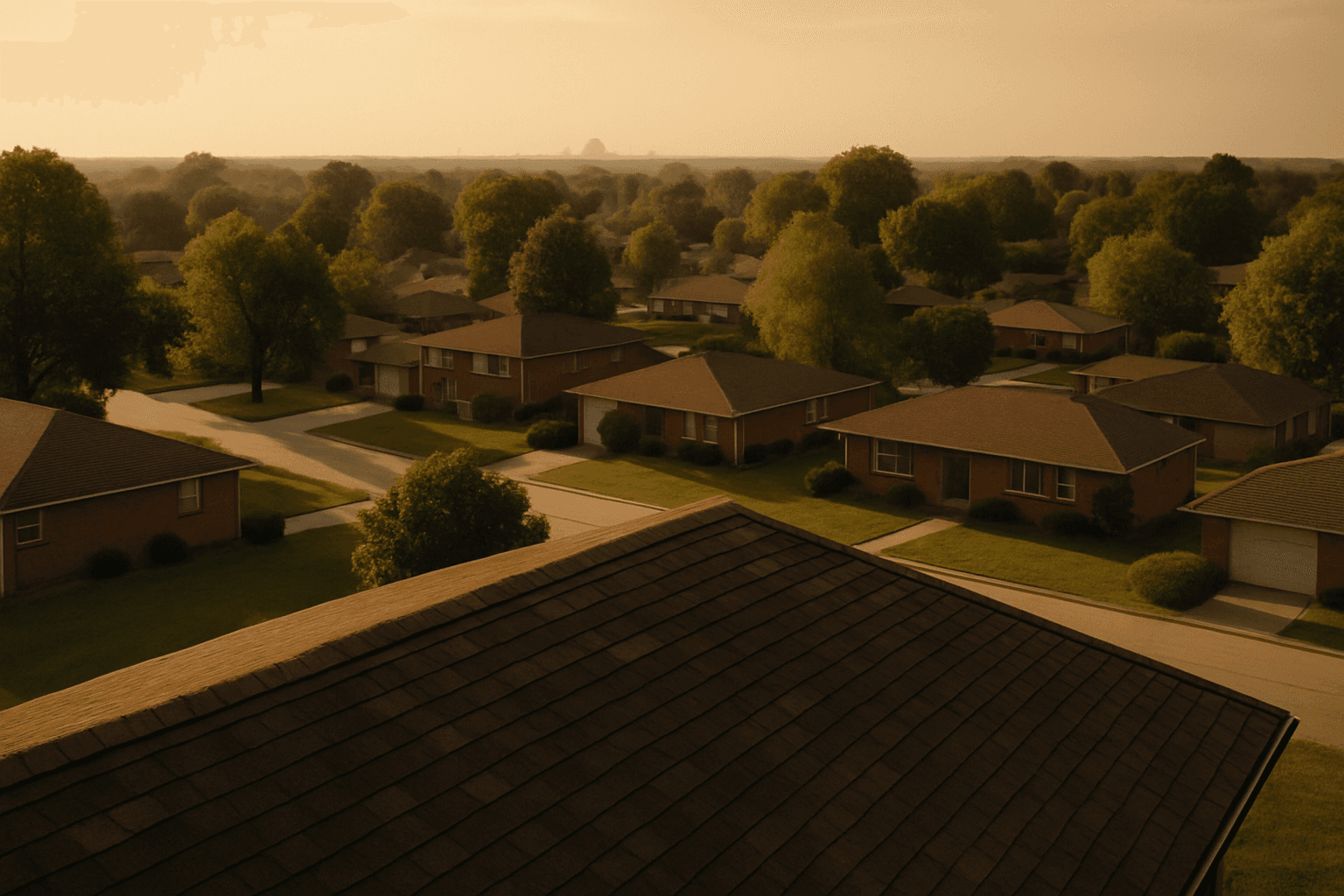
Minnesota is one of the harder roofing climates in the country. The state sits in IECC climate zone 6A — the cold-climate band — with high hail risk and severe wind exposure layered on top of a freeze-thaw regime that runs from October through April. Replacement costs run $10,500–$19,500 (2026 estimate) for a 2,000 sqft asphalt roof, with a median near $13,500. State-level contractor licensing applies through the Department of Labor and Industry's Residential Building Contractor license, and the verification record is publicly searchable — a useful tool given how aggressively storm-chasers work the Twin Cities metro after a hail event.
Two failure modes dominate, and they often overlap on the same roof. Ice damming, driven by under-insulated and under-ventilated attics during prolonged sub-freezing weather, backs meltwater under shingle courses and into wall and ceiling cavities. Hail strikes — particularly the May-through-August convective season across the southern half of the state — degrade granule layers and crack mat substrates in patterns that don't always present visibly from the ground. NOAA Storm Events records show that the Minneapolis-St. Paul metro and the southern tier of counties absorb a disproportionate share of severe-hail (1.0"+) days, and that loss history drives the state's elevated insurance-rate environment.
The hail-claim cycle and how settlements actually work
After a documented hail event, the Twin Cities and southern Minnesota become a target for both legitimate local roofers and out-of-state storm-chasing operations. Minnesota's Statute 325E.66 prohibits a contractor from paying, rebating, or in any way absorbing a homeowner's insurance deductible — this is a real felony-level exposure for the contractor, not a soft consumer-protection rule. Walk away from anyone who offers to "waive" the deductible or work it into the contract pricing. Beyond that, settlements in Minnesota run on actual cash value (ACV) for roofs above a certain age threshold under most carriers' depreciation schedules, with the recoverable depreciation paid only after the work is completed and documented. A homeowner who signs a contract at the inflated "insurance scope" price without understanding the ACV-then-RCV structure can end up funding the gap themselves.
Solar in Minnesota, 2026
Minnesota retains two of the better-engineered post-ITC supports in the upper Midwest. The Solar*Rewards program, administered through Xcel Energy, continues to provide production-incentive payments to qualifying residential systems within current funding tranches, and the state sales-tax exemption on solar equipment is permanent statutory law, not a budget-dependent program. Net metering is largely full-retail for systems under the standard residential cap, though specific tariff treatment varies by cooperative and municipal utility. The federal residential solar ITC expired 12/31/2025, which lengthens payback meaningfully even with the surviving state stack — typical 2026 paybacks in Xcel territory run 10-13 years on a well-sited roof. If your roof is approaching the end of its life, replace it before the array goes up. This is reference, not a quote.