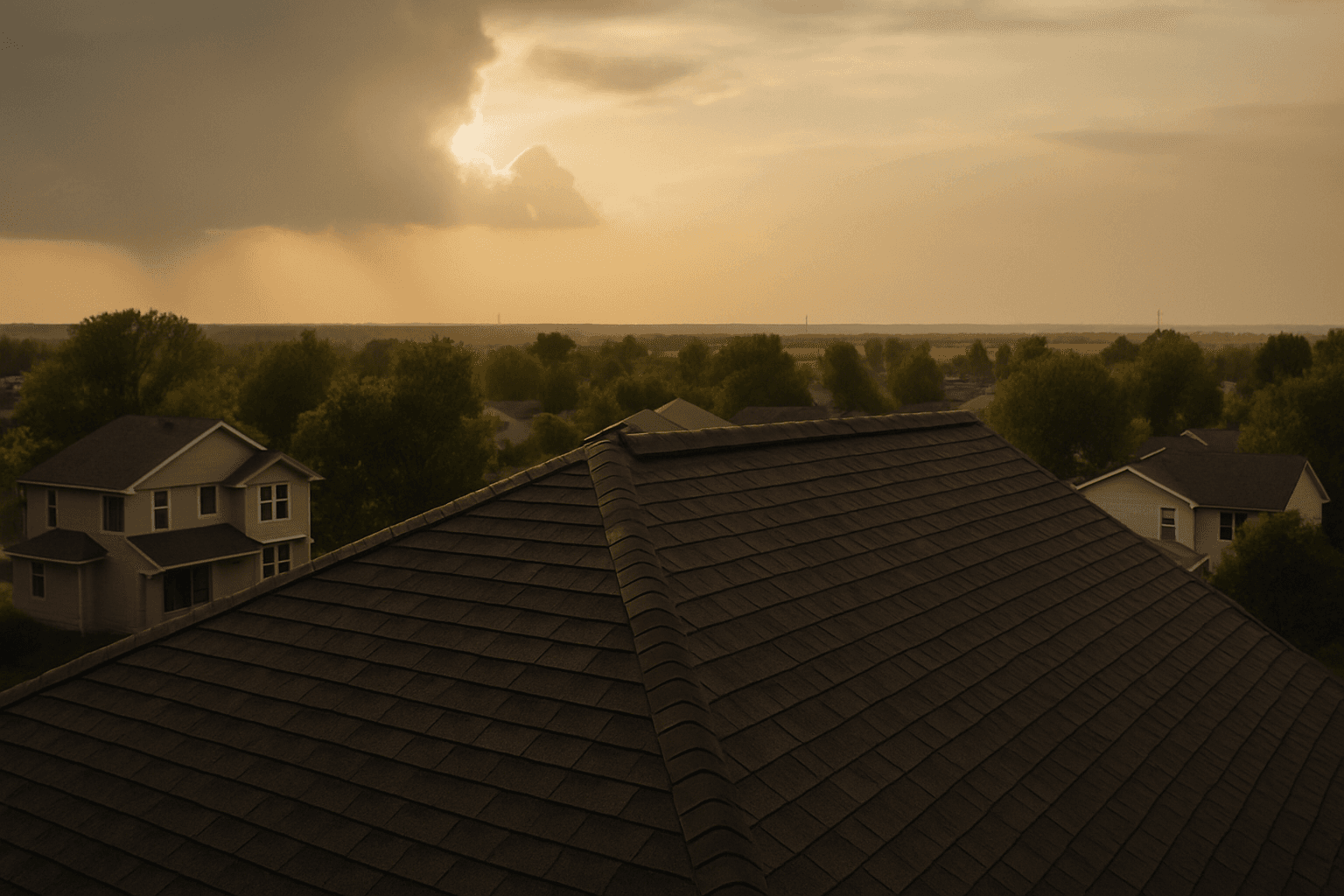
Nebraska sits in IECC climate zone 5A at the geographic center of the country's most extreme hail-and-wind corridor, and that single fact reorganizes nearly every roofing decision a homeowner here will make. The Plains supercell pattern that runs from the Texas Panhandle north through the Dakotas concentrates over Lincoln, Omaha, Grand Island, and the I-80 corridor every April through September. NOAA Storm Events records show Nebraska in the top tier of states for both hail-event frequency and tornado track density. Replacement runs $9,500–$18,000 (2026 estimate) for a 2,000 sqft asphalt roof, with a median near $12,500. Nebraska is a county-licensed contractor jurisdiction, not state-licensed — a meaningful distinction once a major storm hits.
Hail is the dominant failure mode
A standard architectural shingle in Lincoln or Omaha rarely fails because of age. It fails because of a single hail event — typically a 1.25" to 2" stone strike that crushes the granule layer and exposes the asphalt mat to UV in a way that runs out the remaining warranty in two or three summers. Class 4 impact-resistant asphalt has been gaining share for a decade in response, and most major Nebraska carriers offer hail-resistant premium discounts that recover the Class 4 upgrade premium inside one to two renewal cycles. The discount only applies when the installer documents the product class on the certificate of completion and the policyholder confirms it gets posted on the next renewal — a step plenty of homeowners skip.
The percentage-deductible and storm-chaser traps
Wind/hail percentage deductibles are now standard on most Nebraska residential policies. A 1-2% wind/hail deductible on a $325,000 home is $3,250–$6,500 out-of-pocket before the carrier pays the first dollar — and that's before the depreciation hit on an actual cash value (ACV) endorsement. Read the declarations page. If the policy reads ACV on roof, the carrier pays the depreciated value of the damaged shingles, not replacement cost, and the gap on a 12-year-old roof can exceed the deductible itself. The other Nebraska problem is volume storm-chaser activity: out-of-state crews show up within 48 hours of a major hail event, sign homeowners to assignment-of-benefits agreements, and collect the carrier proceeds before disappearing. County licensing means there is no statewide registry to verify their credentials. Stick with a contractor whose business address has been in the county for at least three years, and pay the contractor directly rather than handing over an AOB.
Solar in Nebraska, 2026
Nebraska has no surviving state-level solar incentives in the post-ITC environment — no statewide rebate, no state tax credit, no SREC market. The federal residential solar Investment Tax Credit expired on December 31, 2025, which means 2026 payback now runs entirely on net-metering credits against avoided electricity cost. The state's public-power utility structure — OPPD, LES, NPPD — produces some of the lowest residential electricity rates in the country, which cuts both ways: the avoided-cost upside is smaller, and the case for solar is meaningfully weaker without the federal credit.