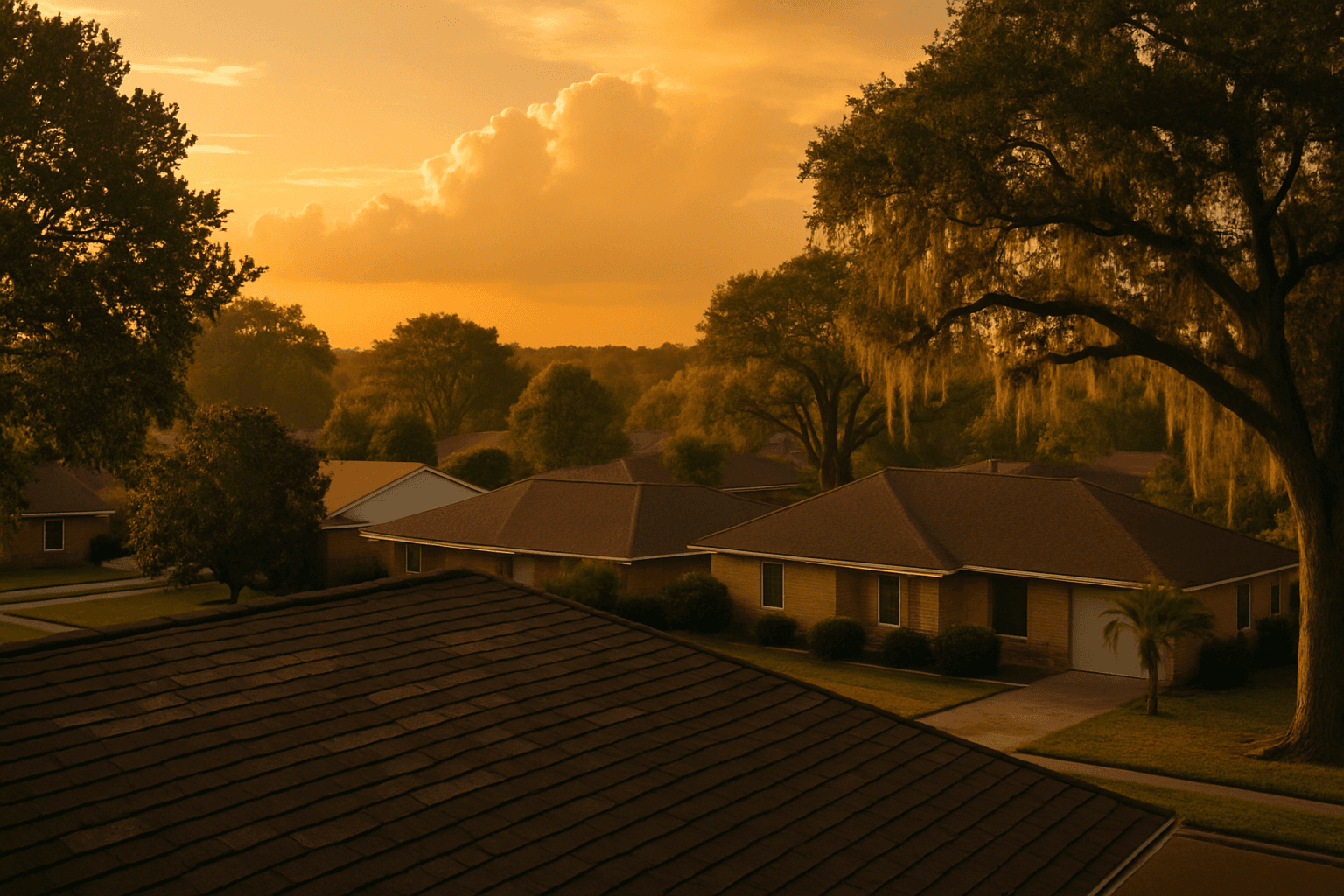
North Carolina spans IECC climate zone 3A across most of the state with moderate hail and hurricane-tier wind risk along the coast, and that mixed posture shapes most roofing decisions here. Replacement runs $9,500–$18,000 (2026 estimate) for a 2,000 sqft asphalt baseline, with a median near $12,500. The Piedmont — Charlotte, Raleigh, Greensboro — produces most of the volume and lives in moderate-risk territory, while the coastal counties from Wilmington to the Outer Banks face fundamentally different design loads. Architectural asphalt dominates the market. North Carolina is a state-licensed contractor jurisdiction through the Licensing Board for General Contractors, and the license should appear on the contract before any tear-off.
The coastal wind-mitigation gap
Hurricane Florence (2018), Hurricane Dorian (2019), and Hurricane Ian's outer-band passage (2022) all delivered the lesson coastal North Carolina insurers have been pricing against for years: standard architectural shingles rated to 110-130 mph routinely fail at lower observed speeds when the underlayment, fastening pattern, or starter-strip detail isn't installed correctly. The state building code in coastal counties requires enhanced fastening — six nails per shingle instead of the inland four — plus a sealed-roof-deck detail using either a self-adhered underlayment or fully-taped seams over standard felt. A bid that doesn't itemize these line items in the coastal counties is a bid worth questioning. That said, the discount carriers offer for verified IBHS FORTIFIED Roof certification — a third-party-inspected wind-mitigation standard — frequently runs 25-35% off the wind portion of the homeowner premium, and on a coastal property the math typically works inside two renewal cycles.
What "claim-funded full replacement" actually means
After major storm events the door-knocking pattern is familiar: out-of-area contractors offering free inspections and pitches built around "the insurance will pay for everything." Several specific things to verify. The contractor must be licensed in North Carolina — not in a neighboring state, and not under a license that's been suspended or expired. The contract must itemize scope, pricing, and a written warranty separate from the manufacturer's product warranty. The contractor cannot lawfully pay or rebate any portion of the homeowner's deductible, and any pitch built around that idea is a flag to walk away.
Solar economics, post-ITC
North Carolina ran one of the strongest state-level rebate programs in the Southeast for years through Duke Energy — that program sunset in 2022 with the final tranche fully subscribed. The federal residential solar ITC expired on December 31, 2025. What that leaves in 2026: full retail net metering remains in force for most residential systems under existing utility rate schedules, and that alone keeps avoided-cost math reasonable on a south-facing roof in good condition, though the payback window has now lengthened well beyond what installers' pre-2025 pitches suggested. Run current utility rates against current installed cost — and confirm the roof underneath is solid before signing a 25-year array onto it. This is reference, not a quote.