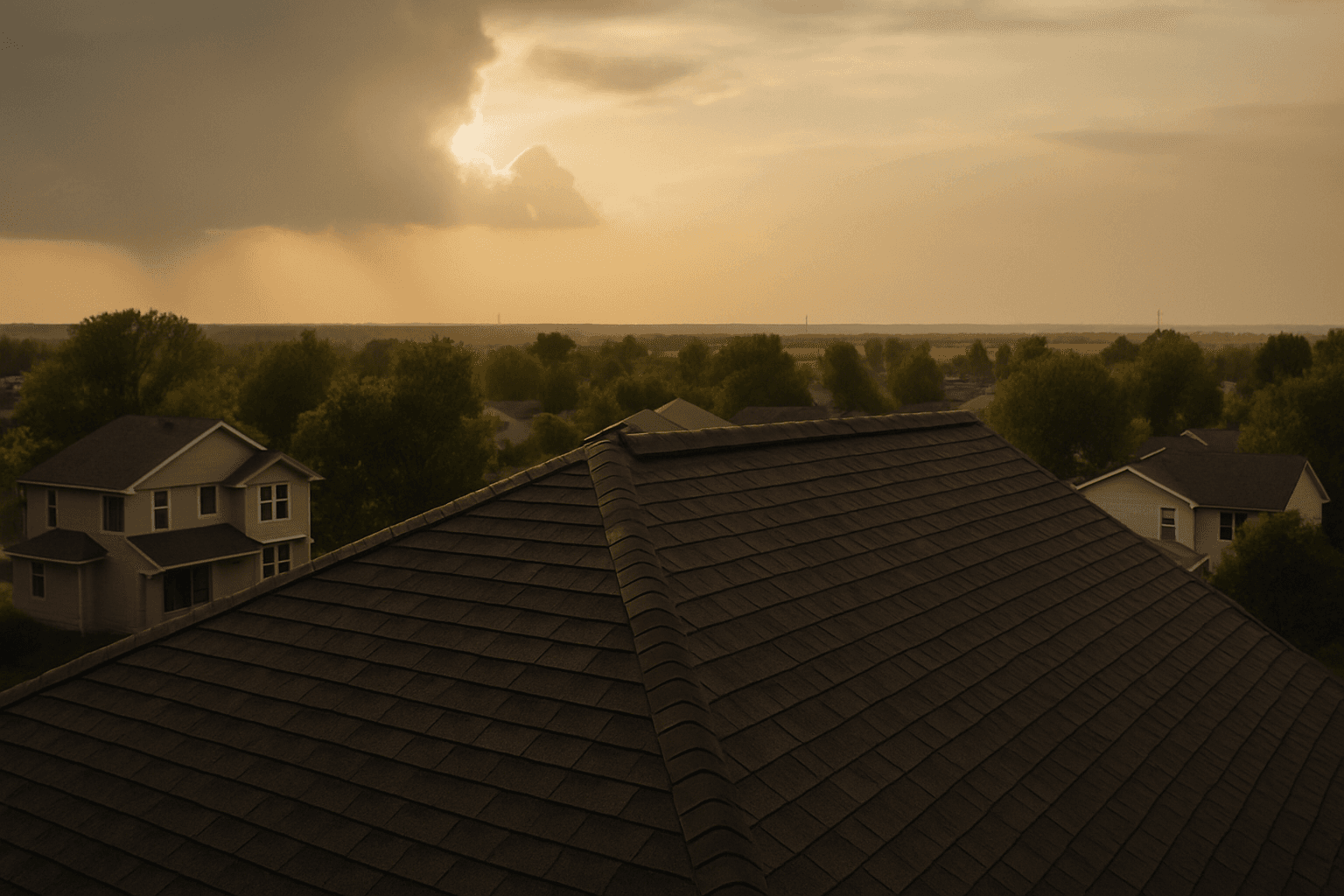
North Dakota sits in IECC climate zone 6A across most of the state with a small slice of zone 7 along the Canadian border, and the combination of high hail, severe wind, and brutal freeze-thaw cycling makes this one of the harder roofing climates in the country. Replacement runs $9,500–$18,000 (2026 estimate) for a 2,000 sqft asphalt baseline, with a median near $12,500 — modest by national standards because labor and overhead are low here, not because the work is easy. Bismarck, Fargo, Grand Forks, and Minot collect most of the volume, and all four sit inside the northern plains hail-and-wind belt that runs from Texas up through the Dakotas. Architectural asphalt dominates the residential market.
Cold and freeze-thaw are the dominant structural failure modes
The headline failure mode in North Dakota is not hail damage on its own — it's the way an annual hail event interacts with 200-plus freeze-thaw cycles on the roof deck. A shingle that takes a moderate bruise in July loses granules over the next three years as repeated freeze-thaw stress pries the bruised area open. By year five, what looked cosmetic has become a leak path. The fixes that matter are Class 4 impact-resistant asphalt (which most major carriers discount 10-30% for), continuous ice-and-water-shield membrane extending at least 24 inches inside the warm wall line, and adequate attic ventilation. Skipping any of the three is the most common reason a 30-year-rated shingle becomes a 12-year roof in this climate.
Licensing is a contractor-by-contractor question
North Dakota requires a state contractor license through the Secretary of State for any work over a fixed threshold — but the classification is broad, the threshold is low, and roofing-specific specialty regulation is thin. In practice, homeowners need to verify three things separately: a current general contractor license, valid workers' compensation insurance through Workforce Safety and Insurance (the state's monopoly carrier — out-of-state contractors frequently arrive without it), and general liability insurance with a current certificate. After major hail events, out-of-state storm-chaser crews flood the state, sometimes operating under a license filed only days before the work starts. The license date matters as much as the license number itself.
Solar reality, 2026
North Dakota has no surviving statewide residential solar incentive program in 2026, no SREC market, and no state income-tax credit for solar. The federal residential ITC expired on December 31, 2025. What that leaves: full retail net metering through most utilities, modest solar resource compared to the Southwest, and avoided-cost math that depends almost entirely on local utility rates. The honest 2026 framing: solar still pencils on a south-facing roof in some Bismarck and Fargo homes where the rate schedule and installed cost align, but the payback window now runs meaningfully longer than installers' pre-2025 pitches suggested. If a roof is due for replacement in the next five years, do the roof first — re-roofing under an existing array easily adds $3,000–$5,000 to the project. This is reference, not a quote.