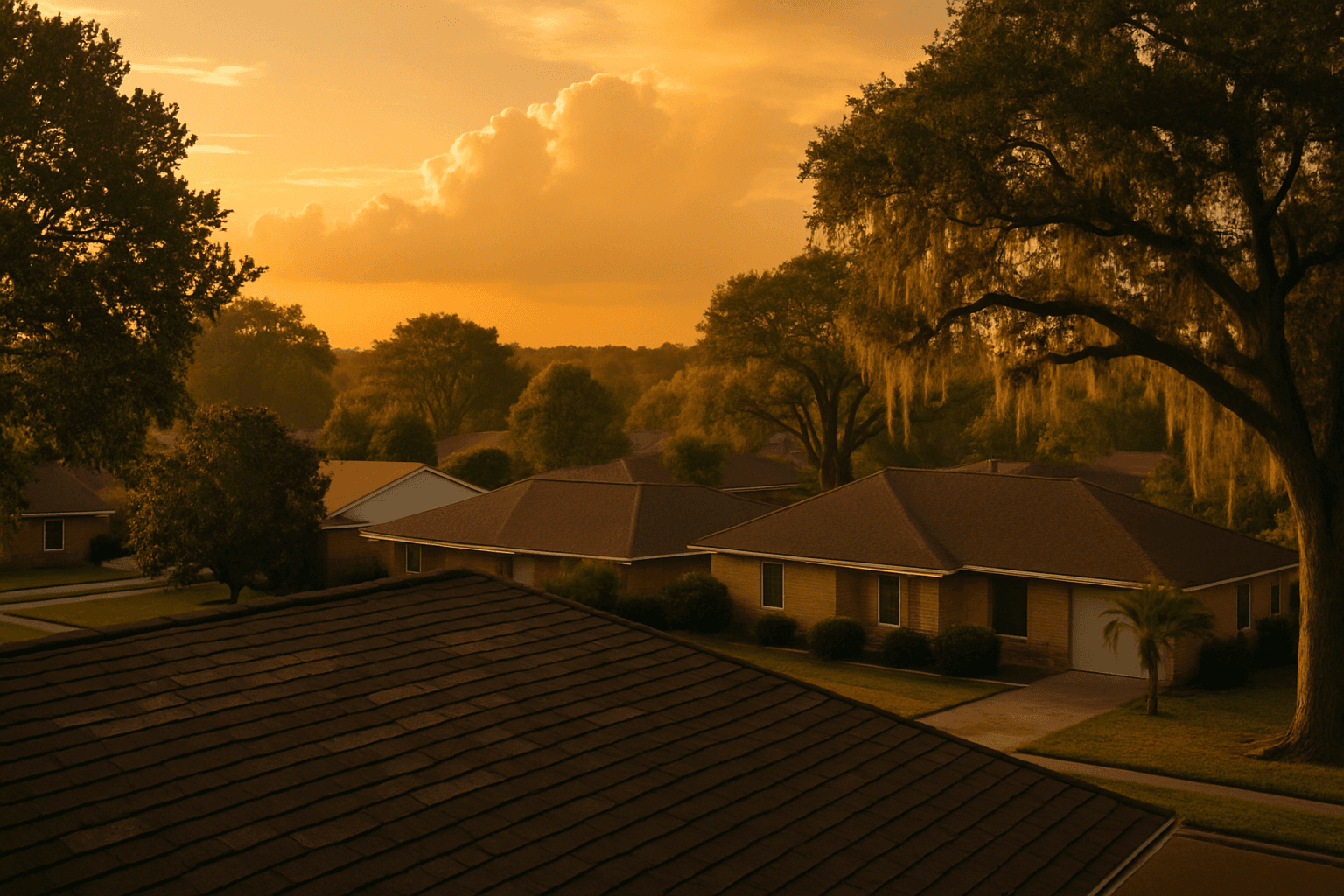
South Carolina sits in climate zone 3A with moderate hail exposure inland and hurricane-tier wind on the coast, and the wind question is the one that should anchor most roofing decisions a homeowner here makes. Charleston, Beaufort, Myrtle Beach, and the Lowcountry counties absorb a disproportionate share of named-storm landfalls and post-tropical wind events, while the Piedmont and Upstate get a more pedestrian severe-thunderstorm season with occasional hail. Replacement costs for a 2,000 sqft asphalt roof run $9,500–$18,000 (2026 estimate), with a median near $12,500 — a number that runs noticeably higher on barrier islands and historic-district properties. The state licenses residential roofing contractors through the South Carolina Contractor's Licensing Board, and the license number is verifiable online.
The dominant failure mode along the coast is not a direct Category 4 strike, which is a generational event. It is long-duration 50-70 mph wind exposure that arrives with weakening hurricanes and post-tropical depressions. That envelope exposes the same weaknesses every Atlantic-coast home shares — undersized starter courses, four-nail rather than six-nail shingle attachment, ridge-cap products rated for the wrong zone, and valleys without ice-and-water shield underneath. The Building Code Council's wind-zone map runs from 110 mph in the Upstate to 150 mph on the immediate coast, and matching the installed assembly to the actual zone matters more than any single shingle product choice.
The most generous state solar credit in the post-ITC environment
South Carolina runs one of the most generous state-level residential solar incentives in the country: a 25% state income-tax credit on installed system cost, capped at $35,000 over 10 years per taxpayer. With the federal residential solar ITC expired as of December 31, 2025, this single state credit now carries unusual weight in the South Carolina payback story — especially for homeowners with enough state tax liability to absorb the credit over the carry-forward window. The credit is usable against state income tax up to 50% of liability per year, with unused balance carried forward up to 10 years. Net metering varies by utility — Duke Energy, Dominion Energy South Carolina, and the cooperative utilities each handle exports differently, and the legislature's 2024-2025 reform package shifted newer customers onto avoided-cost-style export rates rather than full-retail. Verify your utility's current tariff before any installer presents a payback model.
If your South Carolina roof is 15+ years old and you're considering solar, do the roof first. Re-roofing under an existing array reliably adds $3,000–$5,000 to a future replacement, and reputable installers will not warranty panels mounted on a roof with fewer than 15 years of remaining life. On the coast, the wind-uplift attachment requirements for solar mounts on a 140 mph wind-zone home are substantially stricter than inland. This is reference, not a quote — your specific replacement cost and solar payback depend on pitch, layers, decking condition, wind-zone classification, utility territory, and your individual state tax liability.