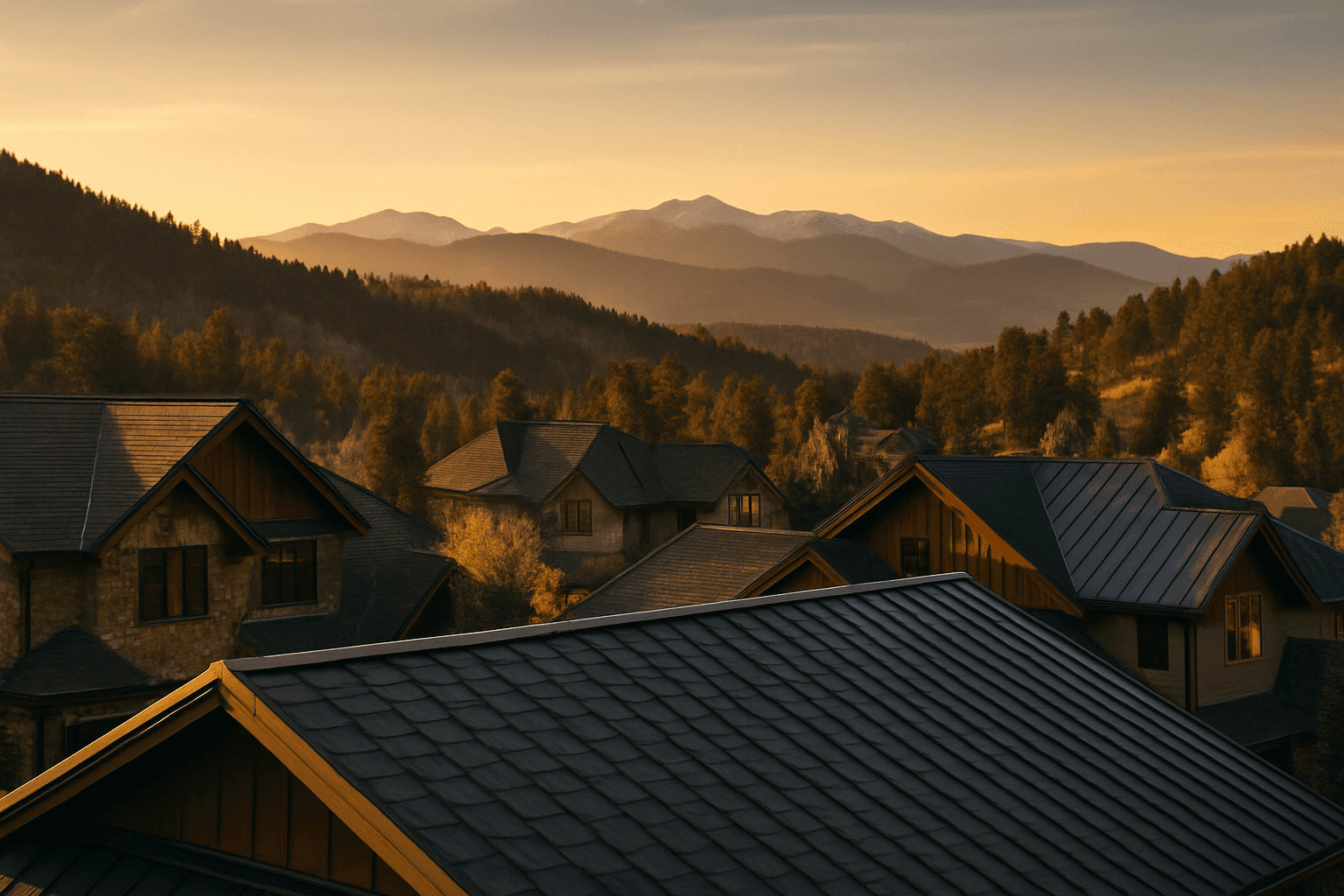
Utah sits in IECC climate zone 5B with Moderate hail and Moderate wind exposure on the NOAA Storm Events aggregate — a notably calmer risk profile than the Front Range two states east, and a fact that meaningfully shifts the roofing math along the Wasatch Front. Replacement costs run $10,000–$19,000 (2026 estimate) for a 2,000 sqft asphalt roof, with a median near $13,000, reflecting strong demand across the Salt Lake, Utah, and Davis County corridor. Utah is a state-licensed contractor jurisdiction administered by the Division of Professional Licensing, and the posture is meaningfully tighter than the no-license neighbors of Idaho and Wyoming.
The dominant failure modes in Utah are not hail-driven. They are altitude-amplified UV exposure, freeze-thaw cycling on north-facing slopes, and ice-dam pressure on under-ventilated eaves through the Cottonwood and Park City corridors. Asphalt-shingle service life along the Wasatch Front typically runs 18-22 years on a properly ventilated 30-year-rated architectural product — meaningfully shorter than the marketed warranty, and the gap is almost entirely a UV story. South-facing slopes at 4,200-7,000 feet of elevation absorb materially more UV per year than the same slope at sea level, and granule binder degrades on a timeline the warranty doesn't track. The first sign is granule loss in the gutters, not a leak.
What the state license actually changes
Utah's contractor licensing is administered through DOPL under category S330 for residential and small commercial roofing. The S330 license requires a specific roofing examination, a bond, and proof of general liability and workers' comp coverage. Unlike states with a single general-contractor license that bundles roofing in by default, Utah's roofing-specific category gives a homeowner a fast way to verify the contractor has been examined on roofing specifically. The honest move before signing: confirm the S330 license number on the DOPL portal, confirm the bond is current, and confirm manufacturer-credentialed installer status for the specific shingle product being proposed.
Solar economics in 2026 — the state credit still helps
The federal residential solar Investment Tax Credit expired December 31, 2025. What survived in Utah: the Renewable Energy Systems Tax Credit, a state-level credit applied to solar PV system cost — currently capped meaningfully below the historical 25%-of-cost figure that applied through the early 2020s, and stepping down on a published schedule. The state credit alone does not replicate what the federal ITC delivered, but it does compress payback noticeably more than a no-state-incentive jurisdiction. Net-metering treatment depends on which utility serves your address — Rocky Mountain Power's posture has shifted toward export-credit haircuts in recent rate cases, and municipal utilities run their own programs. The honest 2026 payback story lands between "still works" and "works on a longer horizon than 2023-2024" — and it depends on the utility footprint and the roof's remaining service life. This is reference, not a quote — your specific replacement cost depends on pitch, layers, decking condition, and access.