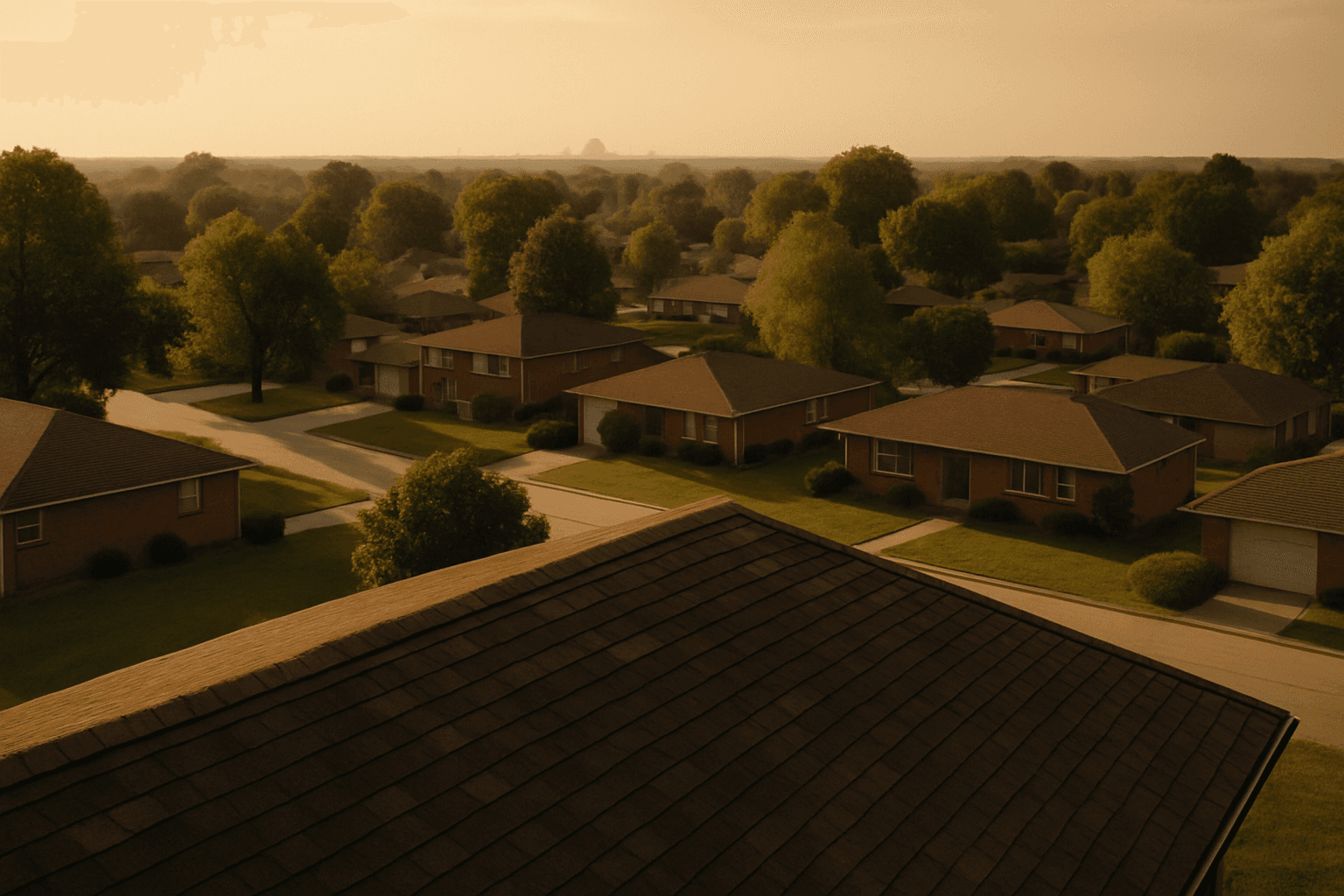
Wisconsin is a cold-climate roofing market that punishes shortcuts in ways drier and warmer states tolerate. The state sits in IECC zone 6A across most of its territory, with high hail-risk tier and severe-tier wind exposure tied to the upper-Midwest thunderstorm corridor. Replacement runs $9,500–$18,500 (2026 estimate) for a 2,000 sqft asphalt system, with a median near $12,500. The two dominant failure modes are seasonal and compounding — ice-dam formation on under-ventilated eaves through January and February, and freeze-thaw cycling on north-facing slopes that gradually loosens fasteners over twenty winters. The roofs that fail early in Wisconsin are almost always the ones with attic ventilation that didn't meet the 1:300 rule at install or had the soffit vents painted shut at some point in their service life.
Hail and wind events compound the seasonal stress. The June 2022 derecho across the southern half of the state produced the largest single-event roofing claim cluster in recent Wisconsin memory, and the 2023 hail season punished Dane, Waukesha, and Milwaukee counties hard enough to shift several major carriers' deductible structures. Carriers in Wisconsin increasingly write percentage-of-dwelling wind/hail deductibles rather than flat dollar amounts on policies in the I-94 corridor — a 1% deductible on a $400,000 home is $4,000 out of pocket before the carrier pays anything. Read your declarations page before storm season, not after.
State licensing through DSPS
Wisconsin roofing contractors register through the Department of Safety and Professional Services (DSPS), with credentialing tied to the Dwelling Contractor and Dwelling Contractor Qualifier programs for residential work. The honest-answer test on any Wisconsin re-roof: ask the contractor to specify the ice-and-water-shield coverage from eave to a point at least 24 inches inside the warm-wall line. The state's IRC adoption requires it, the manufacturers' warranty terms require it, and the contractors who skip it in favor of #15 felt across the entire deck are the ones whose roofs leak at year seven.
Solar economics under Focus on Energy
Wisconsin is one of the cleaner post-ITC solar stories in the upper Midwest, and the reason is the Focus on Energy program — a statewide ratepayer-funded efficiency and renewable-energy initiative that continues to offer residential solar rebates funded through utility surcharges rather than tax revenue. The federal residential solar ITC ended on December 31, 2025, but Focus on Energy's residential rebate survives that expiration, paying a fixed-amount incentive per qualified installation subject to annual program-budget tranches. Net metering is currently full retail for systems under utility caps. With the federal credit gone, payback in Wisconsin now runs roughly 10–13 years for well-sited homes inside Focus on Energy program windows, depending on utility territory and tranche pricing at signing. If your roof is 15+ years old, do the roof first — re-roofing under existing panels easily adds $3,000–$5,000 to the project. This is reference, not a quote.