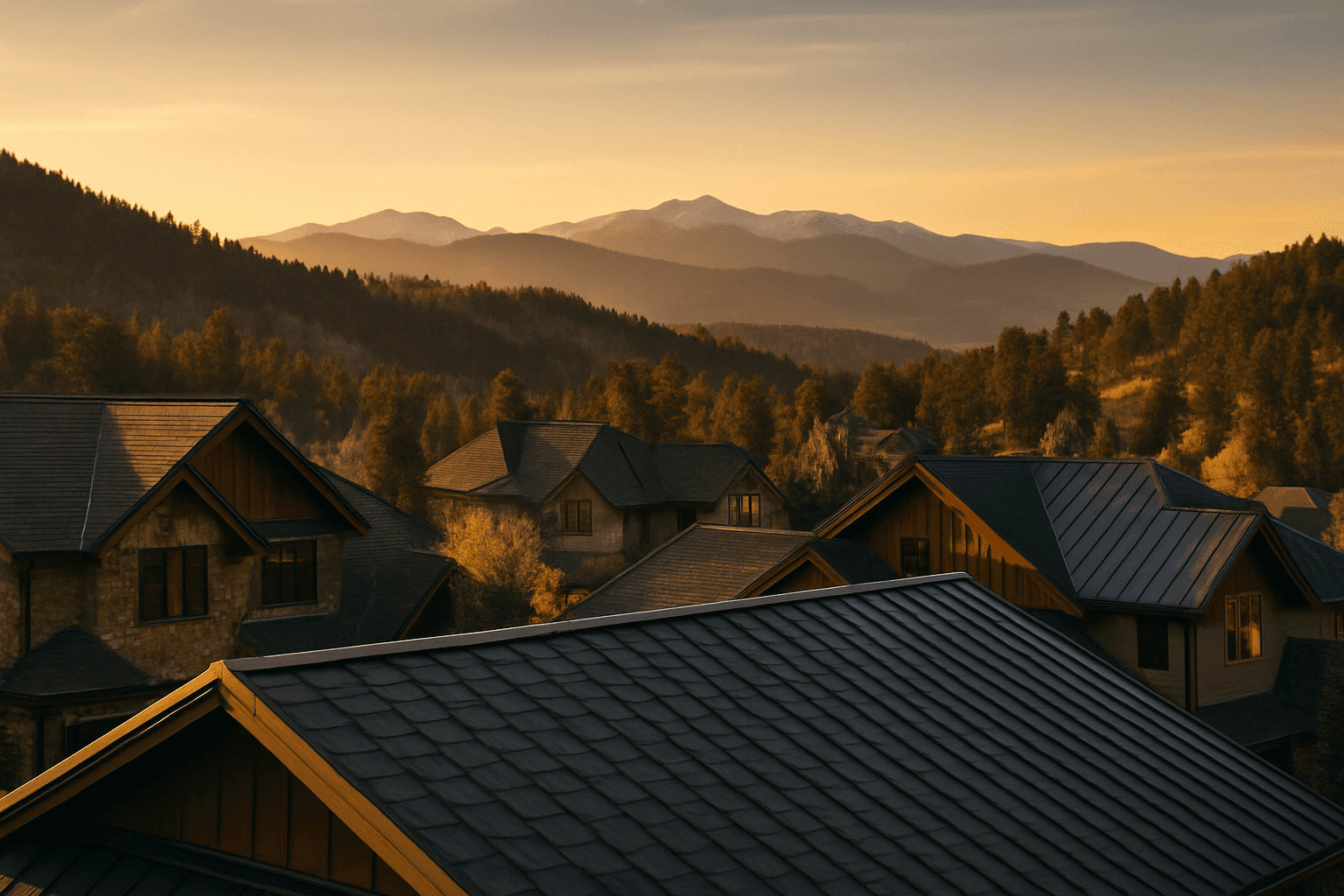
Wyoming is wind country in a way that no other state in the lower 48 quite matches, and a roofing decision here that ignores that fact will fail early. The state sits in IECC zone 6B across most of its territory, with moderate hail risk and severe-tier sustained wind exposure — the I-80 corridor through Rawlins, Casper, and Cheyenne regularly posts some of the highest sustained surface winds recorded in the continental United States, and the building-code specs most contractors quote elsewhere are simply not adequate here. Replacement runs $9,500–$18,000 (2026 estimate) for a 2,000 sqft asphalt system, with a median near $12,500. The honest-answer test: ask the contractor what wind rating the underlayment is fastened to and how many fasteners per shingle they use. Six-nail patterns and a 130 mph product rating should be the floor, not the upgrade.
The compounding stress is altitude. Most Wyoming residential roofs sit between 5,000 and 7,500 feet, where UV exposure runs roughly 25–40% higher than at sea level and the normal degradation curve of asphalt shingles accelerates accordingly. A 30-year-rated architectural shingle in Cheyenne does not deliver thirty years of useful service. Plan for fifteen to twenty, monitor granule loss in years eight through twelve, and budget the next re-roof on the shorter end of the published warranty range. Standing-seam metal performs measurably better against the combination of UV and uplift — both because the panel itself is UV-stable and because mechanically-locked seams resist the progressive uplift fatigue that loosens nail-down asphalt under sustained-wind cycling.
No state license — and what that actually means
Wyoming is one of the few states with no statewide contractor licensing requirement for residential roofing. Some municipalities — Cheyenne, Casper, Laramie — administer local registration, but there is no state-issued license number to verify in the way other states do. That places the verification burden almost entirely on the homeowner. Three things matter: a verifiable Wyoming business address, a current general-liability certificate naming the homeowner as an additional insured, and current workers' compensation coverage. Ask for all three before signing anything. After major hail events along the Front Range — which spill into eastern Wyoming with regularity — out-of-state storm-chaser crews drift north pitching "no out-of-pocket" replacements. With no state license to revoke, recovery options when work goes wrong are far thinner than in licensing states.
Solar economics after the federal credit expired
The federal residential solar ITC ended on December 31, 2025, and Wyoming is one of the harder post-ITC markets in the Mountain West because no major state-level rebate, tax credit, or SREC program currently offsets the loss. What remains is the underlying utility rate structure — Rocky Mountain Power and Black Hills Energy territory predominantly — and net metering under PSC rules. The high-irradiance posture helps production, but the absence of state incentive overlay means payback in 2026 stretches longer than in Colorado or Utah next door. If your roof is 15+ years old, do the roof first. Reference, not a quote.