Most roofs die five to ten years before their rated lifespan because of things the homeowner could have done. Not always — sometimes it's a defective shingle batch, a hidden install error, or a hail event that compresses the timeline regardless of what anyone did or didn't do. But on the pile of asphalt-shingle roofs that fail at year 18 instead of year 25, deferred maintenance is the single biggest cause.
The good news: the maintenance that actually matters is short, cheap, and most of it is DIY-able. Five steps, repeated annually with one larger touch-up every 5-7 years, recovers most of the lost lifespan.
The five-step annual routine
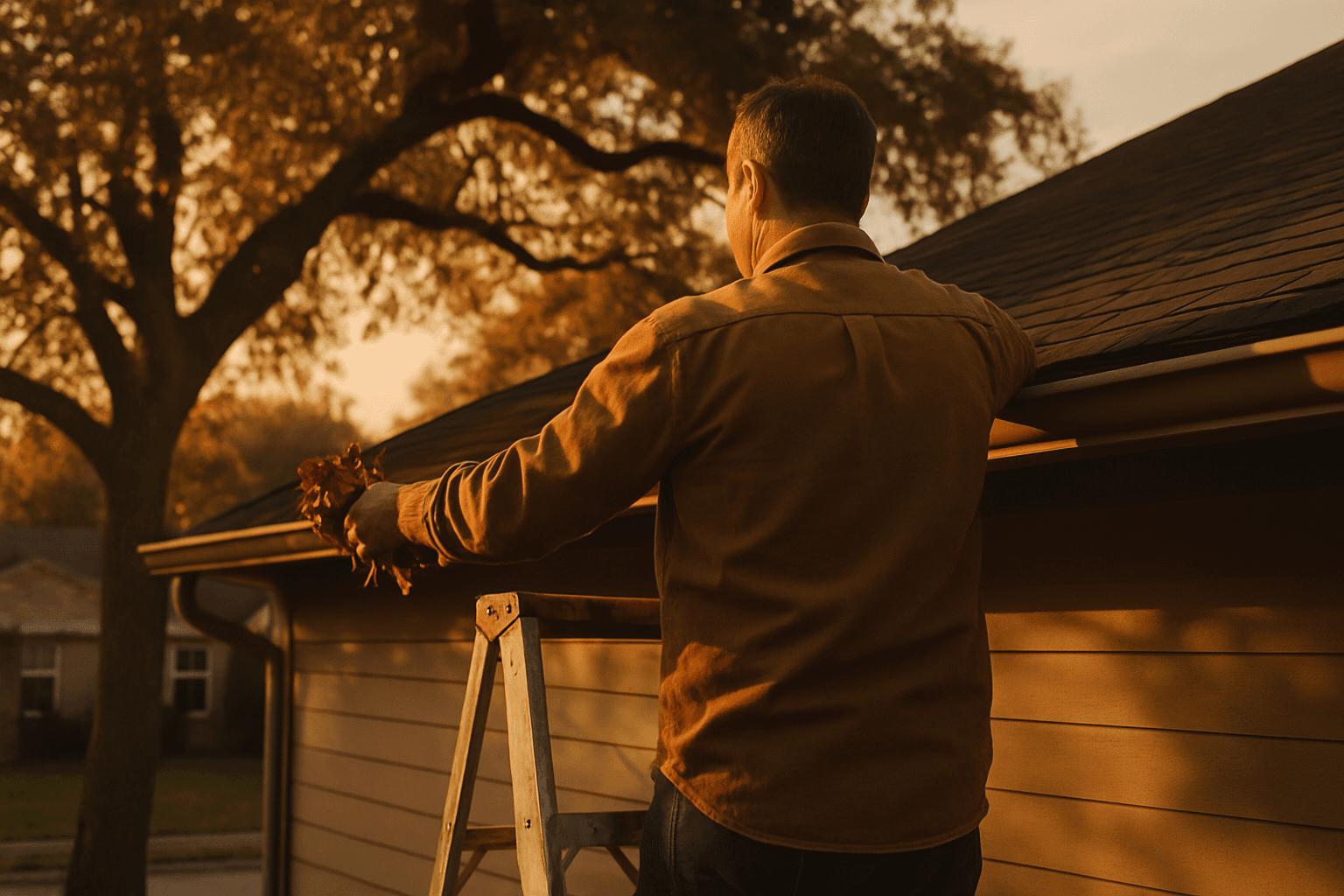
1. Clean the gutters — twice a year minimum. Late spring and late autumn. Clogged gutters back water up under the shingle eave, rot the fascia, and freeze into ice dams that force meltwater up under the shingles. A $80-150 gutter clean prevents two of the most expensive roof failure modes there are. Add gutter guards if leaves are persistent.
2. Trim branches 10+ feet back from the roof plane. Branches scrape shingles in wind, drop debris that holds moisture against the deck, and provide a path for squirrels and raccoons into the soffit. Ten feet is the conservative clearance — six feet works in low-wind areas, fifteen in hurricane belts. Hire an arborist for anything you can't reach safely from the ground.
3. Clear debris off field shingles. Leaves, pine needles, and the buildup that collects in valleys and around chimneys hold moisture against the shingles and accelerate granule loss. A leaf blower from a stable ladder handles most of it. Don't walk the roof to clear debris if you can avoid it — every footstep on hot asphalt costs granules.
4. Re-caulk pipe boots, chimney flashing, and skylight perimeters every 5-7 years. The single most leak-prone component on most residential roofs is the rubber boot around the plumbing-vent stack. The gasket UV-cracks at year 8-12; the caulk degrades on a similar timeline. Re-caulking before the gasket fails is the difference between a $50 maintenance task and a $1,500 leak repair.
5. Verify attic ventilation airflow each fall. Climb into the attic with a flashlight before the heating season. Check that you can see daylight or feel airflow at every soffit-vent location — blocked soffits are the most common ventilation failure. Look for condensation, rust on nail tips, or musty smell. See the ventilation guide for the full diagnostic.
What NOT to do
The wrong moves shorten roof life as effectively as the right moves extend it.
Don't pressure-wash. Pressure-washing strips asphalt-bonded granules off the shingle surface and removes years of UV protection in a single afternoon. NRCA explicitly warns against it. For algae and moss, soft-wash chemical treatment — diluted sodium hypochlorite or zinc-strip retrofitting at the ridge — is the correct method.
Don't walk on hot asphalt. Asphalt shingles soften meaningfully above 80°F ambient. Walking a roof in midsummer afternoon embeds the granules into the seal strip with every footstep and leaves a characteristic wear pattern that's visible from the ground for years afterward. Schedule any necessary roof access for early morning or for a cooler day.
Don't paint over weathered asphalt. "Roof rejuvenation" sprays are largely cosmetic. Most are a 1-2 year visual fix that doesn't change the underlying asphalt-mat condition. A roof that needs cosmetic restoration is usually a roof inside a 3-5 year window of replacement.
Don't add a powered attic fan to an under-ventilated attic without rebalancing intake first. Powered exhaust without sufficient soffit intake pulls conditioned air out of the living space below and concentrates moisture at the roof deck. The "fix" makes the underlying problem worse. Fix soffit intake first.
The cumulative effect
Each of these maintenance items individually moves the lifespan needle by one or two years. The compounding effect is where the 5-10 year delta lives. A roof that gets annual gutter cleaning, periodic flashing re-caulk, code-meeting ventilation, and zero pressure-wash interventions across its life is a different roof than one that gets none of those — even with identical materials, identical install quality, and identical climate.
The cost of the full five-step routine is roughly $200-500 per year, mostly DIY with one contractor touch every 5-7 years. The cost of the lost 5-10 years on the back end of the roof's life is between $2,500 and $7,000 per year of deferred replacement, depending on the roof. The math isn't subtle.
Where DIY ends and the contractor starts
DIY is appropriate for: gutter cleaning with safe ladder access, branch trimming on smaller trees, ground-level inspection with binoculars, debris clearing from lower slopes accessible from a ladder, and the annual attic-ventilation verification.
Contractor work starts at: any walking on the roof itself (especially asphalt past year 10), all flashing repair and re-caulk after year 10, ventilation modifications and powered-fan installations, anything involving the chimney saddle or skylight perimeter, and full annual inspections on roofs past 75% of rated lifespan.
For finding a roofer who'll quote maintenance honestly without trying to escalate every visit into a replacement pitch, see find a roofer. For the broader maintenance and lifespan framework and the material-by-material rating ranges, the replacement hub carries the full math on when extension stops paying back and replacement is the right move.
This is reference, not a quote.